
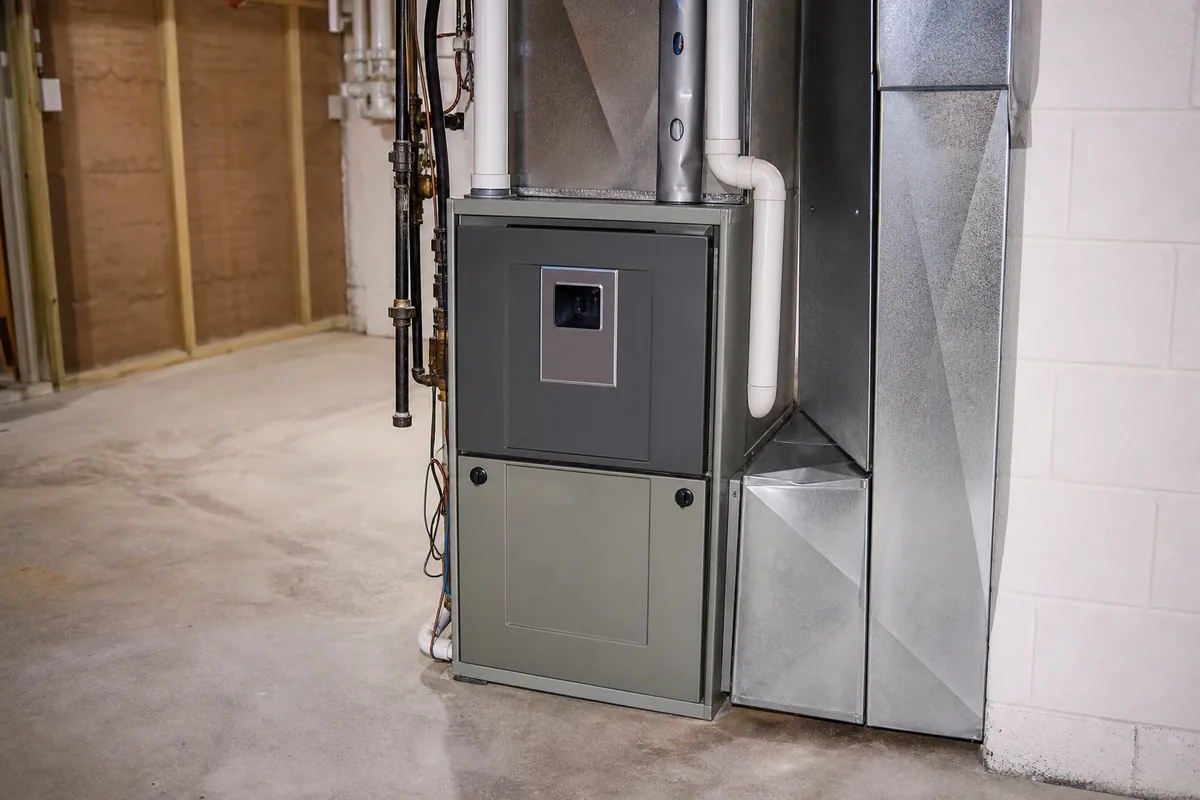
Your furnace runs but the house stays cold, or it won’t turn on at all. A few simple checks are worth doing before you call for service. If you ever smell gas, skip all of this, leave the house immediately, and call the gas utility or 911 from outside.
Quick Answer: Before calling, check that your thermostat is set to heat, confirm the breaker hasn’t tripped, replace a clogged filter, and look for a flashing error light on the furnace. If those checks don’t bring the heat back, a failed ignitor, a clogged condensate line or a closed gas valve may be the cause.
Your Thermostat Settings Are the First Thing to Rule Out
It sounds obvious, but thermostat settings are worth ruling out first. A wrong setting or dead batteries can leave you with no heat from vents while everything else works fine.
What to Check on Your Thermostat
Make sure the mode is set to Heat, not Cool or Off. Set the target temperature a few degrees above the current room reading, and confirm the fan is on Auto. If the screen is blank, swap the batteries first and see if the display comes back.
After bumping the temperature up, wait a minute. You should hear the furnace try to start. If the blower runs but only pushes cool air, the burners or ignitor likely never fired. Keep going through the list.
A Tripped Circuit Breaker Can Shut Down Your Furnace Completely
Even a gas furnace needs electricity to run the blower, controls, and ignition. Lose that power and the whole system goes dark.
How to Check Your Breaker and Power Switch
Find your main electrical panel and look for a breaker labeled furnace, heater, or air handler. A tripped breaker often sits slightly out of line with the others. Flip it fully off, then back on. Also check for a wall switch near the furnace or by the basement stairs. Someone may have flipped it off by accident.
A breaker that trips once may be a fluke. One that trips again right away can point to a failing blower motor or a wiring fault. Do not keep resetting a breaker that will not hold. Repeated tripping means something is drawing too much current, and that needs a professional look.
A Clogged Condensate Drain Line Can Trigger a Safety Shutoff on High-Efficiency Furnaces
High-efficiency furnaces produce water as they run. That water drains away through a small line. When the line clogs, a float switch can shut the furnace down to prevent an overflow.
Warning Signs of a Condensate Problem
Look for a clear or white plastic tube running from the furnace to a floor drain or condensate pump. Check for standing water around the base of the unit. If you see a small plastic switch on the drain pan or line, that is the float that triggers the shutoff. Once the line backs up, the furnace will refuse to fire until the water clears.
Clearing a minor clog is sometimes manageable for a handy homeowner, but it needs care to avoid cracking fittings. If the line keeps clogging, there may be a deeper issue worth a service visit. Staying on top of seasonal upkeep, like a fall heating tune-up, helps catch drain trouble before it leaves you cold.
Your Furnace Ignitor May Have Failed
Many modern gas furnaces use a hot surface ignitor instead of a pilot light. This small part glows hot to light the burners. When it fails, you get everything but heat.
The blower may run while no warm air comes out. You might hear the system try to start, pause, then give up. Many furnaces flash an error code through a small window on the front panel. Count the flashes and check the label inside the furnace door. The code will often tell you whether the problem is ignition related.
An ignitor is fragile and sits close to live electrical connections and the burners. Replacing it is quick for a trained technician but risky to attempt yourself. This one belongs on the call list.
A Closed or Blocked Gas Valve Stops Heat Before It Starts
If the gas supply is interrupted, the burners have nothing to light. The furnace will go through its startup sequence, find no flame, and lock out.
Trace the gas pipe to the furnace and look for a small lever handle on the line. When the handle runs parallel to the pipe, the valve is open. When it sits crosswise, it is closed. If the valve appears closed, or you are not sure of its position, leave it alone and contact Service First or a qualified HVAC professional.
If you smell gas, do not operate switches or the thermostat, leave the house immediately, and call the gas utility or 911 from outside. Beyond the manual valve, the internal gas valve and flame sensor are not DIY territory. If your furnace keeps cycling on and off without warming the house, that repeated safety lockout needs diagnosis by a trained heating technician.
When the Checks Come Up Empty
If none of the steps above restores heat, stop there. Some problems are not safe or practical to handle on your own. A good rule is to stop when the fix involves gas, high voltage, or a part you cannot see clearly.
A lingering no-heat problem can also hint at a worn-out system. If your furnace is aging and repairs are adding up, it may be worth weighing furnace replacement options against another costly fix.
Service First HVAC has served Bucks County homeowners since 2009 and is a Trane Comfort Specialist. The team works across Newtown, Doylestown, Yardley, Warminster, and the surrounding townships. If your checks come up empty, call Service First to schedule a diagnostic visit and get a clear answer on what your furnace actually needs.
Frequently Asked Questions
Why is my furnace turning on but blowing cold air?
The blower is running but the burners are not producing heat. Check whether the filter looks clogged. If it is clean, an ignition problem or a safety control may have stopped the burners, and a technician needs to diagnose it. Check your filter and thermostat first, then call a technician if the heat does not return.
How do I know if my furnace's pilot light went out or if the igniter failed?
Older furnaces have a small standing pilot flame you can see through a window near the base. If it is gone, the pilot went out. Newer furnaces use electronic ignition, where you hear the system try to start and then stop. A failed igniter or dirty flame sensor is the usual cause there.
Can a clogged filter actually cause my heat to stop working completely?
Yes. A badly clogged filter blocks airflow, which lets heat build up inside the furnace. The furnace then shuts the burners off to protect itself. The fan may keep running, so you feel cold air.
What should I check on my thermostat when the heat stops working?
Set it to Heat, raise the temperature a few degrees, and replace the batteries even if the screen still shows a reading. Make sure the fan is on Auto, not On, and that the unit is not in direct sunlight. A blank screen after new batteries usually means it needs service.
Is a furnace that won't heat an emergency?
During a hard Bucks County cold snap, a total loss of heat can become urgent, especially with young children, older adults, or pets at home. If you smell gas, leave the house and call your gas utility right away. For a simple no-heat problem, run the basic checks first, then schedule a technician.
How often should I replace my furnace filter during heating season?
For most homes, a standard one-inch filter should be checked monthly and replaced every one to three months. Homes with pets or heavy use often need more frequent changes. Starting heating season with a clean filter helps prevent no-heat shutdowns.