
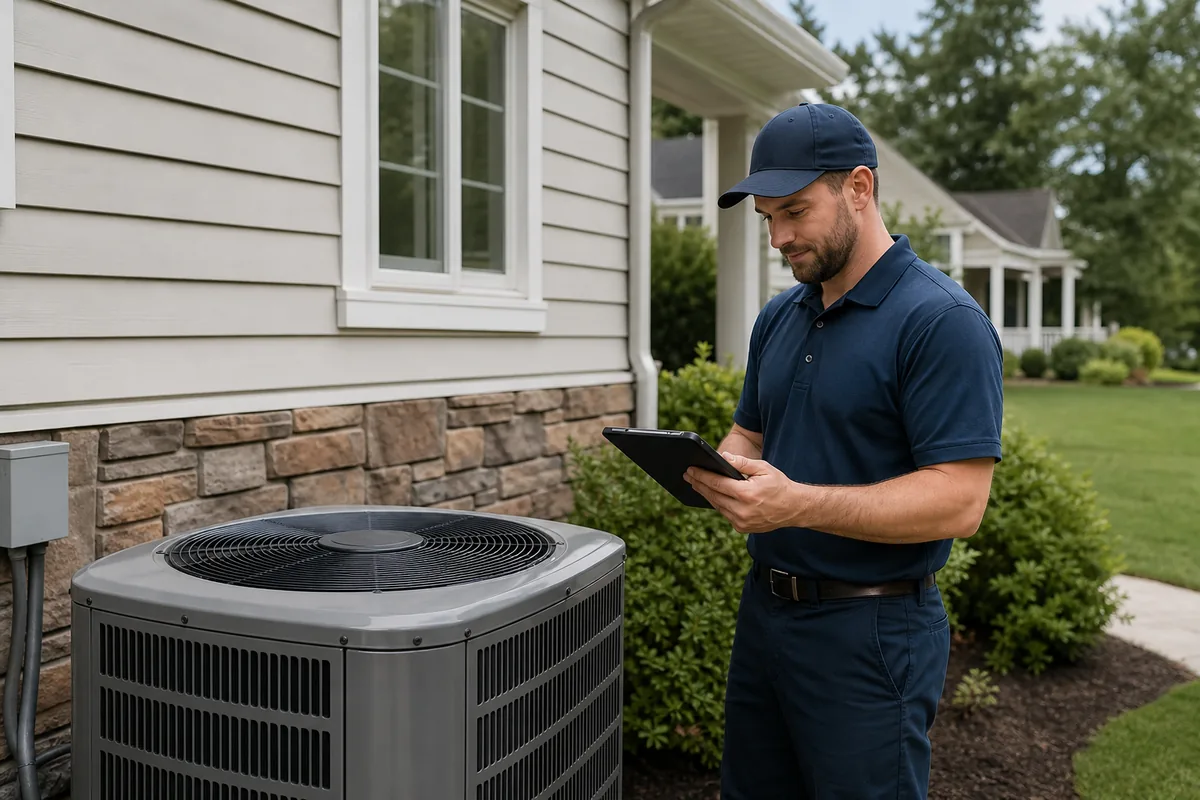
Installing or replacing a cooling system is one of the bigger expenses a homeowner faces. In fact, two neighbors on the same street in Newtown Township can get quotes that look nothing alike. That is not because one of them got ripped off. Instead, the right system depends on your home’s layout, your existing ductwork, and how much cooling capacity you actually need.
Quick Answer: AC installation cost in Newtown and the surrounding townships depends on system type, home size, ductwork condition, and efficiency rating. So contact Service First HVAC for a free, no-pressure estimate before summer demand peaks.
What Drives AC Installation Prices in Newtown Homes Specifically
The number on your quote is not random. Instead, every variable in your home feeds into it. Some of those variables are specific to the houses in this part of Pennsylvania.
Ductwork Condition and Layout
Older homes near Tyler State Park and across Newtown Township often have older ductwork. Builders sized it for oil or gas heat, not central air. Ducts that are undersized, leaking, or poorly routed are a real problem. A new AC unit alone will not fix them. Duct repairs or partial replacement add to your cost. Skipping them means your new system runs harder and cools less. ENERGY STAR says leaky ducts can cut efficiency by 20 to 30 percent.
System Size and Load Calculation
We size AC systems in tons of cooling capacity. That number has to match your home’s heat load, not just its square footage. A proper load calculation accounts for ceiling height, insulation, window area, sun exposure, and climate. Newtown Township summers also bring high humidity, which makes the system work harder. As a result, an oversized unit short-cycles and controls humidity poorly. An undersized one runs constantly and never quite keeps up. So getting the sizing right is one of the most important things an installer does.
Equipment Brand and Efficiency Rating
The SEER2 rating is the current federal standard for cooling efficiency. A higher SEER2 rating means lower operating costs. It also means a higher upfront price. The Department of Energy sets the minimums. Systems sold in Pennsylvania must meet them. A mid-range SEER2 tier often balances upfront cost against long-term savings. The right choice depends on how long you plan to stay. It also depends on what your summer bills look like now. Service First installs Trane systems across a range of SEER2 tiers to match your goals and budget.
Installation Complexity
A simple swap of one central AC unit for another of similar size is the easiest job. Costs climb when the project needs new refrigerant lines, an electrical panel upgrade, or work in tight spaces. Homes with finished basements or complex attics along the Sycamore Street corridor in Doylestown often take more labor.
Central AC vs. Ductless: Which System Costs Less to Install in an Older Newtown Township Home
This is one of the most common questions we hear. In short, the answer depends on what your home already has.
When Central AC Makes More Sense
Does your home already have ductwork in reasonable condition? Then central AC is almost always the cheaper choice. After all, you are reusing infrastructure that already exists. A new air handler and outdoor condenser connect to your current ducts, so the project scope stays manageable. For example, many Doylestown and Warminster homes from the 1970s and 1980s used forced-air heat. As a result, they are often good candidates for central AC without major duct work.
For homes that need new ductwork from scratch, the math changes. Running ducts through finished walls and ceilings is invasive and expensive. Then a ductless system often costs less and disrupts the home far less.
When Ductless Mini-Splits Are the Better Investment
Ductless systems mount small air-handling units in individual rooms or zones. An outdoor compressor connects to them through a small hole in the wall. No ductwork is needed at all. That makes them a good fit for older Newtown Township homes built without central air. They also work well in room additions, converted garages, and multi-zone setups. You can set different temperatures in different areas of your home.
Modern ductless mini-split systems also provide heating. One installation can replace both your AC and your backup heat. That is useful in rooms that do not reach the main ducts. Many ENERGY STAR-certified mini-splits reach SEER2 ratings above 20. That is far more efficient than most central AC at the same price.
The Honest Cost Comparison
A single-zone ductless install for one room usually costs less than a full central AC install. However, a whole-home multi-zone ductless system can cost more than central AC if your home already has ducts. So neither option is universally cheaper. Instead, the right answer comes from an honest look at your existing setup. If you want to compare both options, our AC installation services page explains the evaluation process.
How to Get an Accurate Quote From a Local Installer Without Getting Overcharged
Getting three quotes is standard advice. Still, it only helps if you know what to look for in each one.
Make Sure the Quote Includes a Load Calculation
Any installer who quotes a system size without a Manual J load calculation is guessing. Specifically, the Manual J calculates exactly how much cooling your home needs. It accounts for insulation, windows, climate data, and home orientation. So if a tech prices the job on square footage alone, treat that as a red flag. After all, a correctly sized system performs better and lasts longer.
Ask What’s Included in the Installation Price
Quotes can look very different depending on what they include. For example, some cover only equipment and basic installation. Others add electrical work, refrigerant line sets, a new thermostat, permit fees, and duct changes. So before comparing numbers, make sure each quote covers the same scope. Specifically, ask whether it includes the permit, the line set, the disconnect box, and any electrical upgrades.
Verify Licensing and Insurance
In Pennsylvania, HVAC contractors must hold a Home Improvement Contractor registration and carry liability insurance. So ask for proof of licensing and insurance before you sign a contract.
Don’t Let Urgency Push You Into a Bad Decision
Summer heat waves create pressure to decide fast. A system that fails during a July heat wave in Warminster or Richboro can feel like an emergency. Some contractors use that urgency to push whatever they have in stock. A reputable local installer still assesses your home properly during busy season. If a quote arrives without a site visit, treat it as a rough estimate only.
Have you already had a breakdown and need to weigh repair against replacement? Then our AC repair services page covers what to expect from a diagnostic call.
What Rebates and Financing Can Actually Lower Your Out-of-Pocket Cost
The sticker price is not the final number. In fact, several programs can reduce what you actually pay.
Federal Tax Credits for High-Efficiency Equipment
The Inflation Reduction Act expanded federal tax credits for energy-efficient upgrades. As a result, a qualifying system may earn a federal credit worth up to 30 percent of the installed cost. Annual caps apply by equipment type. ENERGY STAR keeps a current list of qualifying equipment and credit amounts. You then claim the credit on that year’s federal tax return for your primary residence.
Financing Options Through Service First
Would you rather spread the cost over time? Financing options are available through Service First HVAC. That includes Wells Fargo financing plans. You can install a properly sized system now and pay over a term that fits your budget. This helps most when an emergency replacement arrives before you planned for it. For a quick number, get an instant HVAC estimate with no commitment.
Stacking Incentives for Maximum Savings
Federal tax credits, utility rebates, and manufacturer rebates can sometimes combine. As a result, they meaningfully cut the effective cost of a high-efficiency system. For example, a SEER2 18 unit costs more upfront than a minimum-efficiency model. However, after incentives, the gap narrows a lot. Over a 15-year lifespan, the lower operating costs add up to real monthly savings.
How Service First in Bucks County Handles AC Installation
Service First HVAC has installed and replaced cooling systems across Bucks County since 2009. That includes Newtown Township, Doylestown, Yardley, and Southampton. Every installation starts with a proper load calculation, not a guess. Your system gets sized to your home, with your ductwork taken into account. You will get a clear explanation of the options that fit your situation.
Our technicians are licensed in Pennsylvania and New Jersey and have installed systems across Bucks County. They know the local housing stock, from older colonials to ranch homes and additions built without ductwork. As a result, that experience helps us catch problems before they become expensive surprises.
Permits get pulled and utility rebate paperwork gets handled when it applies. The job is not done until the system runs correctly and you know how to operate it. Our HVAC Services in Bucks County, PA page covers everything from new installs to maintenance plans.
Planning a cooling system installation before summer peaks? Now is a good time to schedule. Call Service First at (215) 876-0486 or schedule a free in-home estimate. You will get a real quote based on a real assessment. Want a ballpark first? Try our instant HVAC pricing tool, check our current specials, or see the Bucks County areas we serve.
Frequently Asked Questions
How long does a new central AC installation usually take from start to finish?
A standard central AC replacement using existing ductwork typically takes one full day. That is usually six to eight hours. More complex jobs, like new duct runs or multi-zone ductless systems, can take two days. Your installer should give you a realistic timeline before work begins.
Does the size of my house really change the installation price that much?
Yes, but it’s not just square footage. Larger homes require higher-capacity equipment, which costs more. They may also need more refrigerant line set, additional electrical work, or multiple zones. A proper Manual J load calculation factors in ceiling height, insulation, window area, and local climate, not just square footage, to determine the right system size.
Is it worth replacing just the AC unit or should I replace the whole system at once?
If your air handler and outdoor condenser are more than 10 to 12 years old, replacing both at the same time is usually the smarter move. Mismatched components, a new condenser paired with an old air handler, can reduce efficiency and void the manufacturer’s warranty on the new equipment. If one component is still relatively new and in good condition, your technician can advise whether keeping it makes sense.
What's the difference between SEER and SEER2, and why does it affect what I pay upfront?
SEER2 is the updated federal efficiency rating standard. It replaced the older SEER rating in 2023. It uses a more realistic testing protocol. Because of this, SEER2 numbers are slightly lower than the equivalent SEER rating for the same equipment. A higher SEER2 rating means the system uses less electricity for the same cooling output. That can lower your monthly utility bills. Higher-efficiency equipment does cost more upfront. Rebates and tax credits can offset a significant portion of that difference.
Do I need a permit to install a new AC system in Newtown Township?
Yes. Most municipalities in Bucks County, including Newtown Township, require a mechanical permit for HVAC equipment installation. A licensed contractor will pull the permit on your behalf and schedule the required inspection. Skipping the permit can create problems when you sell the home and may affect your homeowner’s insurance coverage.
How do I know if my existing ductwork can handle a new central AC system?
A qualified HVAC technician will inspect your ductwork as part of the installation assessment. They’re looking for duct sizing, leakage, insulation condition, and airflow balance. If your ducts were sized only for heating and never for cooling, they may need modifications. In many older homes in Bucks County, duct sealing alone can significantly improve performance without a full replacement.