
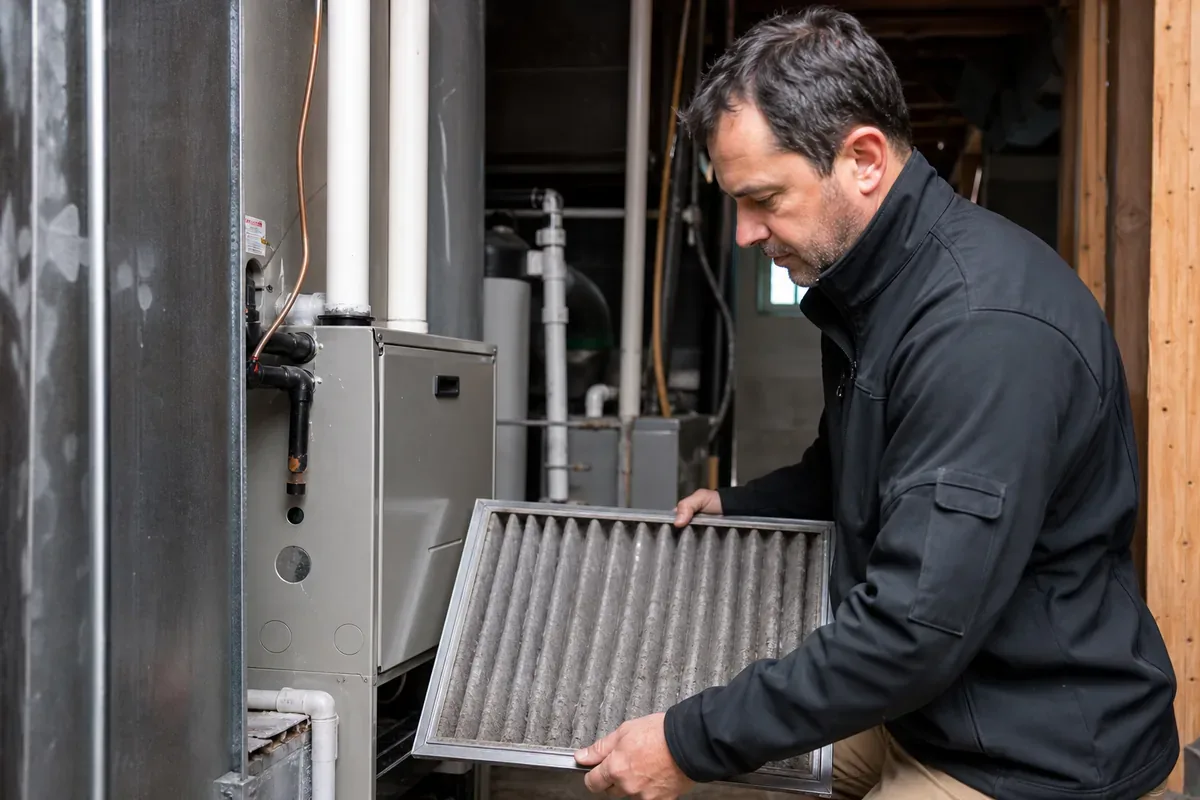
A clogged furnace filter is one of the most common reasons heating bills climb. This is true if you live in Doylestown or anywhere along the Route 202 corridor in Bucks County. Your furnace has likely been working harder than it needs to all winter. A neglected filter is often the reason.
Quick Answer: A dirty furnace filter blocks airflow and forces your system to run longer cycles. It can raise your heating costs. Replace it every 1-3 months to keep costs down and your system healthy.
How a Clogged Filter Forces Your Furnace to Work Harder
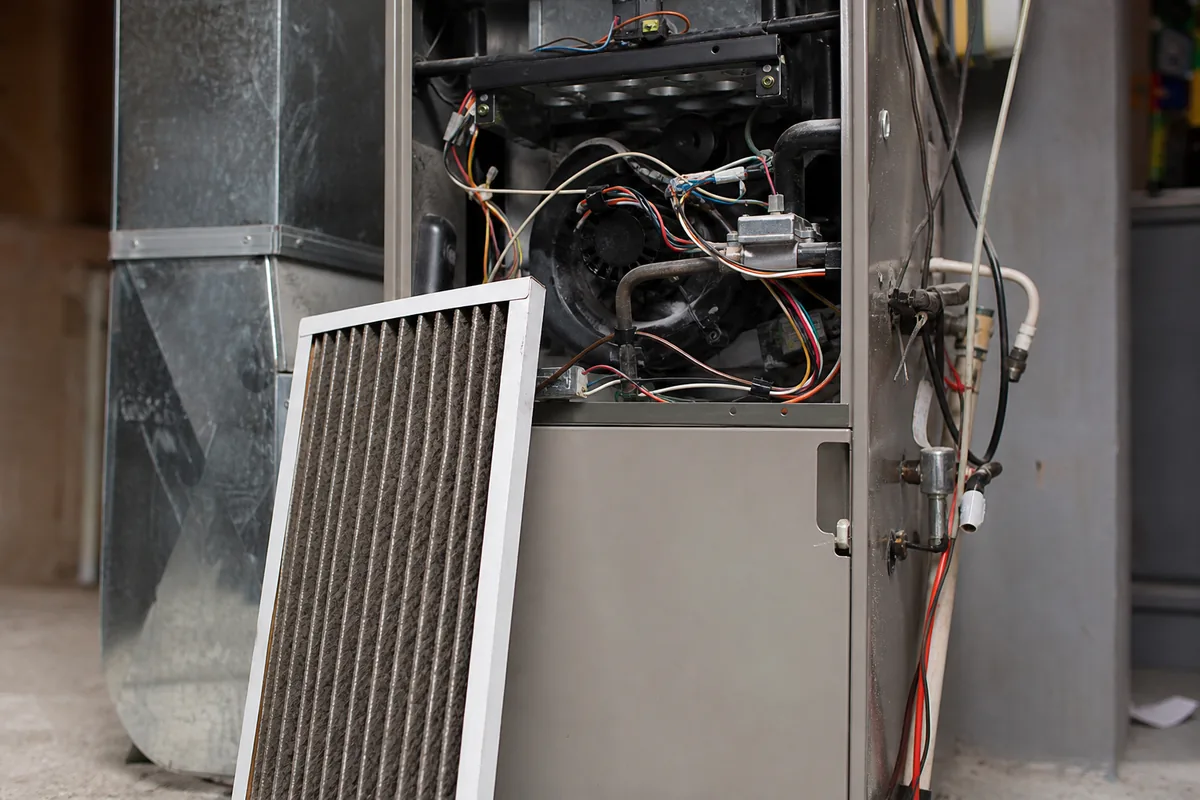
Your furnace pulls air from your home through the return ducts. It heats that air and pushes it back out through the supply vents. The filter sits at the return side. Its job is to catch dust, pet dander, and debris before the air reaches the heat exchanger. That process works well when the filter is clean.
When the filter loads up with debris, your furnace has to pull harder to move air. The blower motor runs longer to reach the thermostat setpoint. It also draws more electricity doing it. According to ENERGY STAR, a clogged filter is one of the leading causes of reduced HVAC efficiency.
The Blower Motor Takes the First Hit
The blower motor is the part that moves conditioned air through your ductwork. When airflow is restricted, the motor runs at higher amperage to compensate. Over time, that extra electrical load raises your utility bill and shortens the motor’s service life. Older colonial homes in Doylestown often had undersized ductwork to begin with. A dirty filter makes an already tight airflow situation worse.
The Heat Exchanger Runs Hotter Than It Should
When airflow is restricted, heat builds up inside the furnace cabinet instead of moving into your living space. The heat exchanger is the metal part that separates combustion gases from your breathable air. It absorbs that excess heat. Repeated overheating causes it to expand and contract more than it was designed to. Eventually, that leads to cracks. A cracked heat exchanger is a serious safety issue, not just a repair cost.
Short Cycling Starts to Appear
Furnace short cycling is when the system turns on, runs briefly, then shuts off and restarts. It does this instead of completing a full heating cycle. One common trigger is a dirty filter that causes the furnace to overheat. That trips the high-limit safety switch. Short cycling wastes energy, since startup draws more power than steady operation. It also puts extra wear on the igniter, gas valve, and blower every time it happens.
The Direct Connection Between Airflow Restriction and Higher Energy Bills
The link between a dirty furnace filter and higher heating costs is not abstract. It is mechanical. Every degree of airflow restriction forces longer run times. Longer run times mean more fuel consumed and more electricity drawn by the blower.
A furnace running at reduced airflow efficiency may burn the same amount of gas per hour as a clean system. But it takes more hours to reach the same result. In a Newtown Township home with a standard two-stage gas furnace, that can mean the system runs longer on a cold night. A clean filter avoids that extra runtime, and it adds up across an entire heating season.
Fuel Consumption Climbs Quietly
Most people do not notice the increase right away because it happens gradually. The filter gets a little dirtier each week. Run times stretch a little longer, and the bill inches up. By the time the filter is fully clogged, the bill may be noticeably higher. The cause is not obvious without checking the filter directly. Heating and cooling make up a large share of a home’s energy use. So even a modest efficiency loss from a dirty filter shows up clearly in monthly costs.
The Thermostat Keeps Calling for Heat
A dirty filter blocks airflow and causes uneven heating in your home. Rooms far from the air handler may stay too cool. Rooms near supply vents can overheat. Your thermostat keeps calling for heat because the temperature never reaches the setpoint. So the furnace keeps running, burning fuel, and drawing power. All of this happens because the filter is blocking airflow.
Duct Pressure Increases Throughout the System
Restricted airflow does not just affect the furnace. It raises static pressure throughout the duct system. High static pressure can cause flex ductwork to collapse partially at connection points. It can also reduce airflow to individual rooms and stress duct seams. In ranch homes in Levittown, ductwork often runs under the floor or through a crawl space. Pressure changes there can cause popping or whistling sounds. You might mistake those sounds for a more serious problem.
How Often You Should Actually Be Changing Your Furnace Filter
The answer depends on the filter type, the home, and how the system is used. There is no single universal schedule. But there are clear guidelines based on real-world conditions.
Standard 1-Inch Filters
A standard 1-inch fiberglass or pleated filter should be replaced every 30 to 60 days during heating season. If you have pets, plan to replace it closer to every 30 days. These filters usually have a MERV 4 to MERV 8 rating. That means they load up with debris faster than thicker media filters. Checking them monthly takes less than two minutes. It is the most cost-effective HVAC maintenance habit you can build.
Thicker Media Filters (4-Inch and 5-Inch)
Deeper media filters are often installed in whole-home filtration cabinets. They have a larger surface area and can last 6 to 12 months. However, if you have heavy dust, multiple pets, or allergy concerns, check them every 3 months. A MERV 13 filter captures far more fine particles than a basic filter. It is a common upgrade when indoor air quality matters to you. Our indoor air quality services cover whole-home solutions that work with your existing system.
Homes With Pets, Allergies, or High Dust
Filters load up faster in homes with two or more pets or older plaster walls and original ductwork. A filter lasting 60 days in newer construction may clog in three weeks in an older home. That is especially true with hardwood floors, two dogs, and aging ductwork. Check your filter by holding it up to a light source. If you cannot see light through it, replace it now.
Signs Your Filter Is Already Hurting Your Heating System
Some of these signs are easy to miss because they develop gradually. If you have not changed your filter recently, check it first. Do that before assuming a larger problem is to blame.
Your Energy Bill Has Increased Without a Clear Reason
Your heating bill may be higher than the same period last year, even with similar weather. If so, a dirty filter is one of the first things to rule out. Dirty filter heating costs are real and measurable. Pull the filter, check its condition, and replace it before calling anyone. In many cases, that one step resolves the issue.
Airflow From Vents Feels Weak
Hold your hand near a supply register while the furnace is running. If the airflow feels noticeably weaker than it used to, the filter is likely restricting the blower’s output. Weak airflow from vents is one of the clearest signs that a filter replacement is overdue. This symptom often appears before any increase in energy bills becomes obvious.
The Furnace Runs Constantly or Short Cycles
A furnace that runs too long without reaching your thermostat setting may have an airflow problem. One that turns on and off in short bursts has the same issue. Both behaviors waste energy. They also put stress on your system. Check your filter first. If a new filter does not stop the short cycling within a day or two, call a technician.
Dust Accumulates Faster Than Usual
A clogged filter can no longer trap particles well. Dust bypasses it and moves through your ducts. It then settles on furniture, registers, and surfaces. If you are dusting more often than usual, check your filter. If it has not been changed in months, those two things are connected.
What Happens to Your Furnace When a Dirty Filter Goes Ignored Too Long
Short-term, a dirty filter raises your bills and reduces comfort. Long-term, it causes mechanical damage that leads to repairs or early system replacement. This is where a small maintenance habit becomes a significant financial decision.
The Heat Exchanger Can Crack
Restricted airflow causes heat to build up inside the furnace cabinet. Repeated overheating cycles stress the heat exchanger metal. This happens through thermal expansion and contraction. A cracked heat exchanger lets combustion gases mix with your indoor air. That includes carbon monoxide. The U.S. Environmental Protection Agency identifies carbon monoxide as a serious indoor air hazard. A cracked heat exchanger is one residential source of that risk. This is not a repair to put off. If a technician finds a cracked heat exchanger, the system needs to come out of service right away.
The Blower Motor Burns Out Prematurely
Blower motors are built to run a set number of hours. Restricted airflow forces the motor to draw more power. That extra strain shortens the motor’s life. Replacing a blower motor is a mid-range repair cost. In older systems, full replacement may make more financial sense. You can explore that option through our furnace installation services. A technician can look at your system’s age and condition. Then you can decide which path makes sense.
The Evaporator Coil Can Freeze in Dual-Use Systems
Some homes use one air handler for heating and cooling. This often includes a heat pump. Restricted airflow can cause the evaporator coil to freeze. This happens most during shoulder seasons, when the system switches modes. A frozen coil stops your cooling from working at all. It can also cause refrigerant pressure problems. A qualified technician needs to diagnose those problems. If you have a heat pump, our heat pump services include an airflow and coil inspection.
You May Need Furnace Repairs That Could Have Been Avoided
Igniter failures, limit switch replacements, and blower motor repairs are common furnace repairs. Many of these problems trace back to a dirty filter. A filter not changed on schedule causes real damage. These failures are not catastrophic. But they are inconvenient and avoidable. If your furnace is showing symptoms, check out our furnace repair services. We cover diagnostics and repairs for most common issues.
The System’s Overall Lifespan Shortens
A properly maintained gas furnace can last many years. A furnace running under chronic airflow restriction may fail sooner. The cost difference between replacing a system years early and on schedule is significant. Filter changes are the lowest-cost maintenance task available to you. The return on that investment is measured in years of added system life.
How Service First in Bucks County Handles It
Service First HVAC has been serving Bucks County homeowners since 2009. Our technicians know the area, know the homes, and know the systems.
When a heating problem traces back to the filter, a technician can also check the blower motor, heat exchanger, limit switches, and duct connections. This confirms whether a neglected filter has caused secondary damage. In Newtown Township and Doylestown, your home may be newer construction or an older colonial. Filter issues there often compound existing ductwork inefficiencies. A technician can look at both.
Filters can be checked and replaced during a service visit. If you want a more complete solution, whole-home filtration upgrades are available.
If your heating bill keeps going up and you are not sure why, start with a filter check. It is fast and low cost. Schedule a diagnostic call with Service First HVAC, or call us directly. You will get a clear picture of what is going on with your system. You will also learn what it will take to fix it.
Frequently Asked Questions
How much can a clogged filter actually raise my energy bill?
A severely restricted filter can raise heating costs, depending on how long it has been in place and how hard the system is working. In a home running the furnace regularly through a Bucks County winter, that adds up over the full season.
What kind of filter should I be using in my home?
For most Bucks County homes, a pleated MERV 8 filter is a solid baseline. It captures common household particles without restricting airflow the way higher-MERV filters can in systems not designed for them. If someone in your home has allergies or asthma, a MERV 11 or MERV 13 filter may be worth the upgrade, but confirm with your HVAC technician that your system’s blower can handle the added resistance. Using a filter with too high a MERV rating for your system can cause the same airflow problems as a dirty filter.
Can a dirty filter cause my furnace to stop working entirely?
Yes, it can. A heavily clogged filter can trigger the furnace’s high-limit safety switch, which shuts the system down to prevent overheating. The furnace may restart once it cools down, but it will shut off again quickly if the filter is still blocking airflow. Some homeowners call this a furnace breakdown when it is actually a safety response to restricted airflow.
Is it okay to run my furnace for a few weeks with a dirty filter?
A few extra days is unlikely to cause lasting damage, but running a visibly clogged filter for weeks is a real risk. The longer the restriction continues, the more heat builds up around the heat exchanger and the harder the blower motor works. In older systems that are already near the end of their service life, a few weeks of restricted airflow can accelerate a failure that was already coming. If the filter is gray and solid with debris, replace it the same day you notice it.
How do I know what size filter my furnace takes?
The filter size is printed on the cardboard frame of your current filter. Pull the filter out of the return air cabinet or the slot at the base of the air handler and read the dimensions directly off the frame. Common sizes are 16×20, 20×25, and 16×25, but there is no universal standard. If the filter frame is damaged or unreadable, measure the opening with a tape measure and round to the nearest inch.
Does a dirty filter affect my AC as well as my furnace?
Yes. In most homes, the furnace and air conditioner share the same air handler and filter. A dirty filter restricts airflow in both heating and cooling modes. During summer operation, restricted airflow across the evaporator coil can cause it to freeze, which shuts down cooling and can damage the compressor over time.