
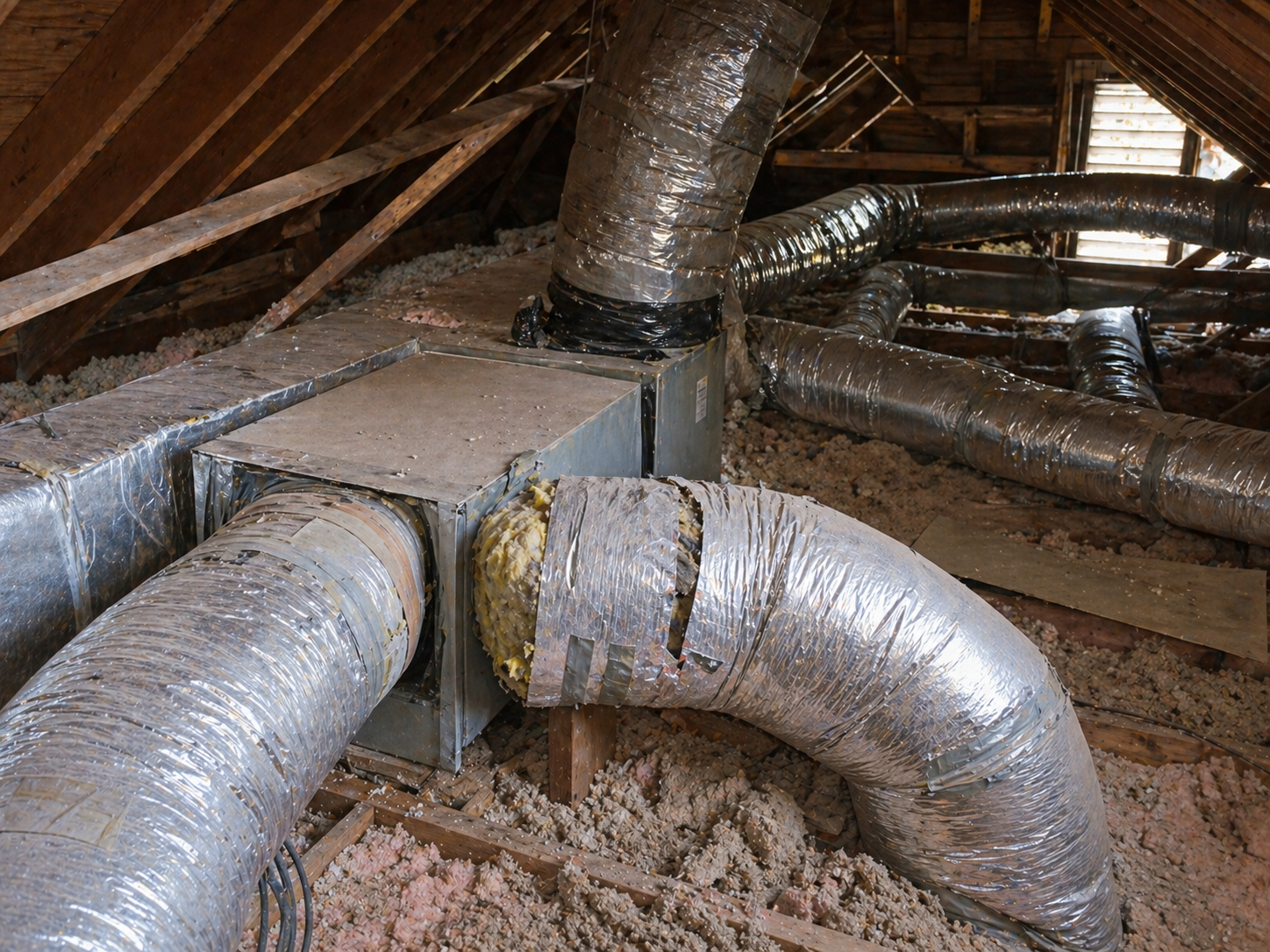
Most comfort and efficiency problems in Bucks County homes trace back to the ductwork. Hot upstairs, cold downstairs, rooms that never warm up, energy bills that climb every winter. The ducts are the part of the HVAC system you never see. But they shape every comfort outcome in your house.
Quick Answer: Most ductwork problems fit into five categories. Those are: leaks, disconnects, undersized runs, blockages, or poor design. The fastest check is simple. Compare airflow at every register on the same floor. If one register is much weaker than another, you likely have a duct problem. It is probably not a furnace problem.
Service First has worked on Bucks County ductwork since 2009. Most issues we see fall into a small set of patterns. This guide walks through how to spot them, what you can safely check, and when to call.
Signs You Have a Ductwork Problem
Ductwork problems show up in comfort, in dust, and in energy bills. Watch for these signs:
- One or more rooms stay cold in winter or hot in summer no matter what the thermostat says
- Airflow at some registers is noticeably weaker than at others
- Dust returns to flat surfaces within days of cleaning
- You hear whistling, rattling, or banging when the system cycles
- Energy bills creep up year over year with no other explanation
- The basement, attic, or crawlspace where ducts run feels warmer than expected when heat is on
- You see visible disconnects, sagging insulation, or rusted metal sections on exposed ductwork
Most homes with one of these signs have at least one duct problem. Many have more than one.
The Five Most Common Ductwork Issues in Bucks County Homes
1. Leaks at Joints and Seams
Sheet-metal ducts are joined with screws, mastic, or metal foil tape. Over the years, the seal at every joint can loosen. Mastic dries out, tape peels, and screws back off. The result is conditioned air leaking into the basement, attic, or crawlspace before it reaches a room. Industry studies show that leaky ducts can waste 20 to 30 percent of conditioned air. In Bucks County, that shows up as cold upstairs bedrooms. Your basement may also feel suspiciously warm on a winter day.
The fix is straightforward when ducts are accessible. Clean the joint, apply mastic or aluminum-backed UL 181 tape, and reinsulate. Inaccessible runs inside finished ceilings or walls sometimes need aerosol-based duct sealing.
2. Disconnected Duct Runs
A run that comes loose at the trunk or register boot sends air into the wrong space. In a Bucks County basement, that often means heat goes into the basement instead of upstairs. In an attic, conditioned air vents straight outdoors. Disconnects can happen from rough HVAC service work, home settling, or a weak original install.
Signs of a disconnect include one room that is dramatically cold or hot compared to its neighbors. You may also notice a warm spot in the basement or attic right above the run. Sometimes you can hear a whoosh of air coming from the disconnect itself.
3. Undersized Ductwork
Older Bucks County homes often have small ductwork. It was sized for heating only. Adding AC can cause problems. Upgrading to a bigger unit can too. The original trunk and branches may be too small. A system like that hits its safety limits early. It short-cycles and shuts off too soon. Far rooms never get enough airflow.
Undersized ducts are also common in additions and second-floor build-outs that tie into the original trunk. You cannot fix undersized ducts by sealing or cleaning. The branches that are too small must be re-run.
4. Blockages and Debris
Ducts collect dust and pet hair over time. They also pick up drywall debris from renovations. Sometimes rodents or insects build nests inside them. A blockage anywhere in the duct reduces airflow downstream. In bad cases, airflow at the affected register drops to almost zero. A dropped construction bag can cause this. So can a collapsed flex run or a rodent buildup.
If you suspect a blockage, the right next step is a duct camera inspection, not a cleaning service. Inspection confirms what is actually inside the ducts before any work is done.
5. Poor Original Design
Not every duct problem comes from age. Some homes never worked well because the original duct layout was wrong. Common mistakes include too few returns. Long branch runs, sharp 90-degree bends, and undersized trunk lines also cause problems.
Poor design is the hardest issue to fix. It usually means redoing the duct layout. A properly designed system can pay back its cost. Many Bucks County homes see that payback in 5 to 7 years. You may also notice lower bills and better comfort.
How to Check Your Ducts Yourself
Before calling for an evaluation, you can rule out the easy stuff with these five checks.
- Replace the air filter if it is older than 90 days. A clogged filter mimics duct problems by choking airflow at every register.
- Walk through every room and confirm supply and return registers are not blocked by furniture, rugs, or curtains.
- Hold your hand a few inches in front of each supply register while the system runs. Strong, steady airflow at most registers is a good sign. Weak airflow at one register suggests an upstream duct issue. That could be a leak, disconnect, or blockage on that branch.
- Walk through the basement, attic, or crawlspace where exposed ducts run. Look for sagging insulation, visibly disconnected joints, daylight at seams, or rust.
- Pull off any accessible register cover and shine a flashlight inside. Significant dust or debris within a foot of the register often suggests buildup deeper in the run.
What Not to Do With Ductwork Issues
A few common DIY moves make things worse:
- Do not close vents in unused rooms. Closing registers back-pressures the system, can damage the blower, and rarely helps comfort in the cold rooms.
- Do not seal ducts with duct tape. Despite the name, standard cloth duct tape fails fast on actual ducts. Use mastic or UL 181 aluminum-backed tape.
- Do not auto-book a duct cleaning service. Cleaning is a condition-based fix, not preventive maintenance. EPA guidance is to inspect first and clean only when buildup is confirmed.
- Do not ignore the problem. Duct issues drive up energy bills and stress your furnace or AC. The system works harder to compensate, and parts wear out faster. Fixing the duct issue usually costs less than replacing the equipment.
How Service First Diagnoses Ductwork Problems
When we evaluate a duct system, we start by mapping airflow at every register. We measure static pressure to confirm whether the system is operating in its design range. We pressurize the ductwork to identify leak points. For inaccessible runs, we use a camera inspection to see inside without opening drywall.
The recommendation is specific to what we find. That could mean targeted sealing at confirmed leak points. It could mean repairing disconnects or resizing undersized branches. In some cases, a full duct redesign is needed. We tell you which fix is needed and what it will accomplish. There are no bundled “duct package” upsells.
When to Schedule an Evaluation
Schedule a duct evaluation when:
- Comfort issues have lasted more than one season
- Energy bills are climbing without an obvious cause
- Adjusting vents and replacing filters did not solve the problem
- You are about to install a new furnace or AC. You want to make sure the ducts are sized correctly for the new system.
- You just finished a renovation that altered any duct runs
If your home shows several signs at once, the issue is rarely going to fix itself. Call Service First at (215) 876-0486 for a duct evaluation, or schedule online. We serve Doylestown, Newtown, Yardley, Richboro, Warminster, Langhorne, and the rest of Bucks County.
FAQs
What is the best company to evaluate comfort problems caused by ductwork issues in Bucks County?
Look for a company that does a real airflow and static-pressure measurement before recommending work. Avoid any company that pushes a flat-rate duct cleaning or duct package without inspecting first. Service First does duct evaluations on every system check and tells you specifically what is causing the comfort issue.
How much does it cost to fix duct issues?
The cost depends on the issue. Sealing accessible leaks typically runs a few hundred dollars. Repairing a disconnect is usually under a thousand. Re-running undersized branches or fixing a poor original design can range from $1,500 into the low thousands. Access affects the price. The evaluation visit gives you a specific number for your home.
How often should ductwork be inspected?
Plan on an inspection every 3 to 5 years for a typical home. Get one sooner if you notice comfort changes. Also consider one after a renovation or before installing a new HVAC system. An inspection is not the same as cleaning. The inspection tells you whether cleaning or other work is needed.
Can I see inside my ducts without opening up walls?
Yes, a duct camera can show you the inside of most runs. It feeds through your register openings. This is the standard way to spot leaks, disconnects, blockages, or buildup. Those problems are often hidden inside walls and ceilings.
Will sealing the ducts in my Bucks County home really lower my energy bill?
If your ducts are leaking 20 to 30 percent of conditioned air, yes. Typically by a noticeable amount in the first winter or summer after sealing. Older homes with original ductwork are the most likely candidates for meaningful savings. Newer homes with already-tight ducts see less benefit.
Frequently Asked Questions
What should I expect from professional ductwork issues?
When you call a professional to assess ductwork issues, expect a thorough inspection of your ducts for leaks, blockages, or damage. They’ll also provide recommendations for repairs or replacements based on their findings.
How do I know when to call a professional?
If you notice significant airflow issues, increased energy bills, or unusual noises coming from your ducts, it’s time to call a professional. These symptoms often indicate underlying problems that require expert assessment.
What's included in a service visit?
During a service visit, a technician will inspect your ductwork, identify any issues, and provide a detailed report. You’ll receive recommendations for repairs or maintenance to improve your HVAC system’s efficiency.
How much does this service typically cost?
Pricing for ductwork services can vary widely. Factors include the extent of the work needed and the type of ductwork system in place. For a more accurate estimate, it’s best to contact Service First HVAC.