
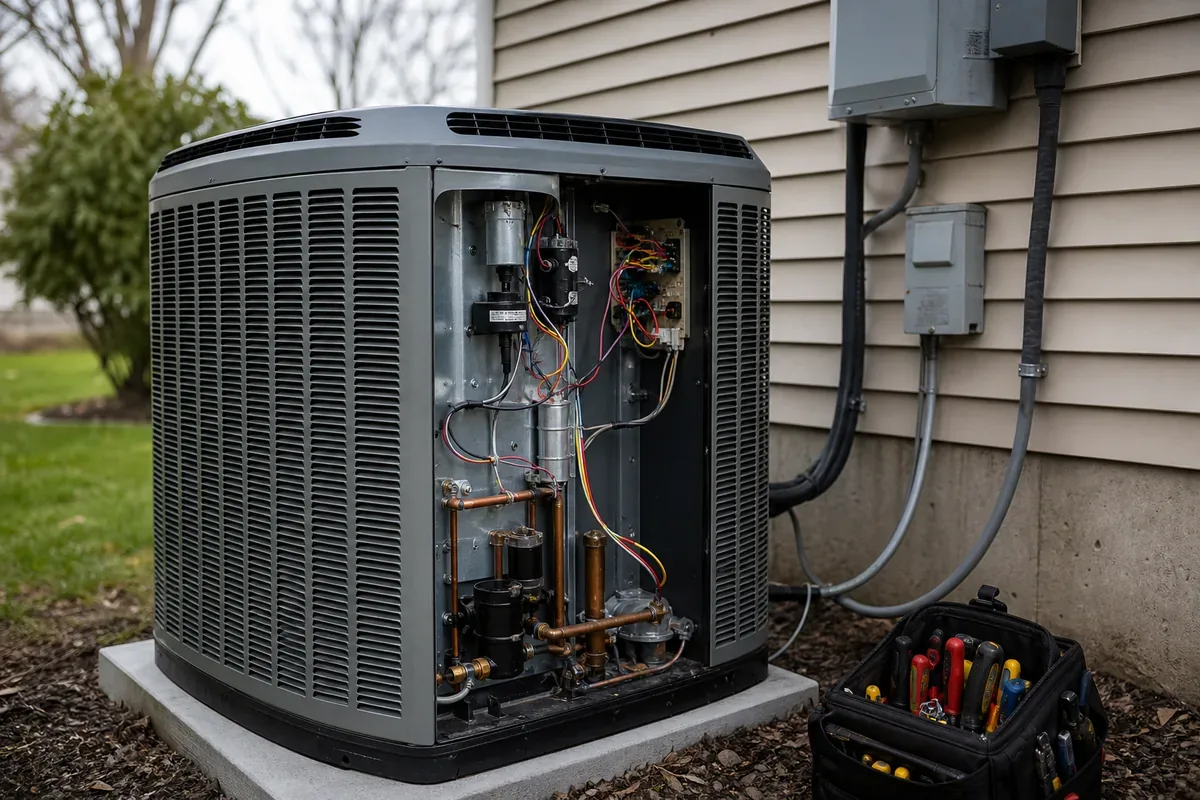
Skipping your annual AC tune-up might seem like a way to save time and money. Then your system quits on a 95-degree July afternoon in Doylestown. A missed maintenance visit stops being a small oversight and becomes a real problem. Neglected HVAC systems do not fail randomly. They fail in predictable ways, and most of those failures are preventable.
Quick Answer: Ignoring HVAC maintenance leads to system breakdowns and higher energy bills. It also causes poor indoor air quality and voided manufacturer warranties. Most failures that leave Bucks County homeowners without AC in July trace back to skipped annual service.
How Skipping AC Maintenance Leads to Breakdowns in the Middle of Summer
An air conditioner that has not been serviced works harder than it should every time it runs. Components wear faster, and small problems compound. By the time peak summer heat arrives, the system is already close to its limit. The first hot stretch of the season is when deferred maintenance shows up as a breakdown.
Refrigerant Leaks Go Undetected
Refrigerant does not get consumed during normal operation. If your system is low, that means there is a leak somewhere. A technician performing a tune-up will check refrigerant levels and inspect the refrigerant lines for signs of leakage. Without that check, a slow leak goes unnoticed until the system stops cooling entirely. By that point, you are looking at a repair that could have been caught and addressed months earlier.
Dirty Coils Force the System to Overwork
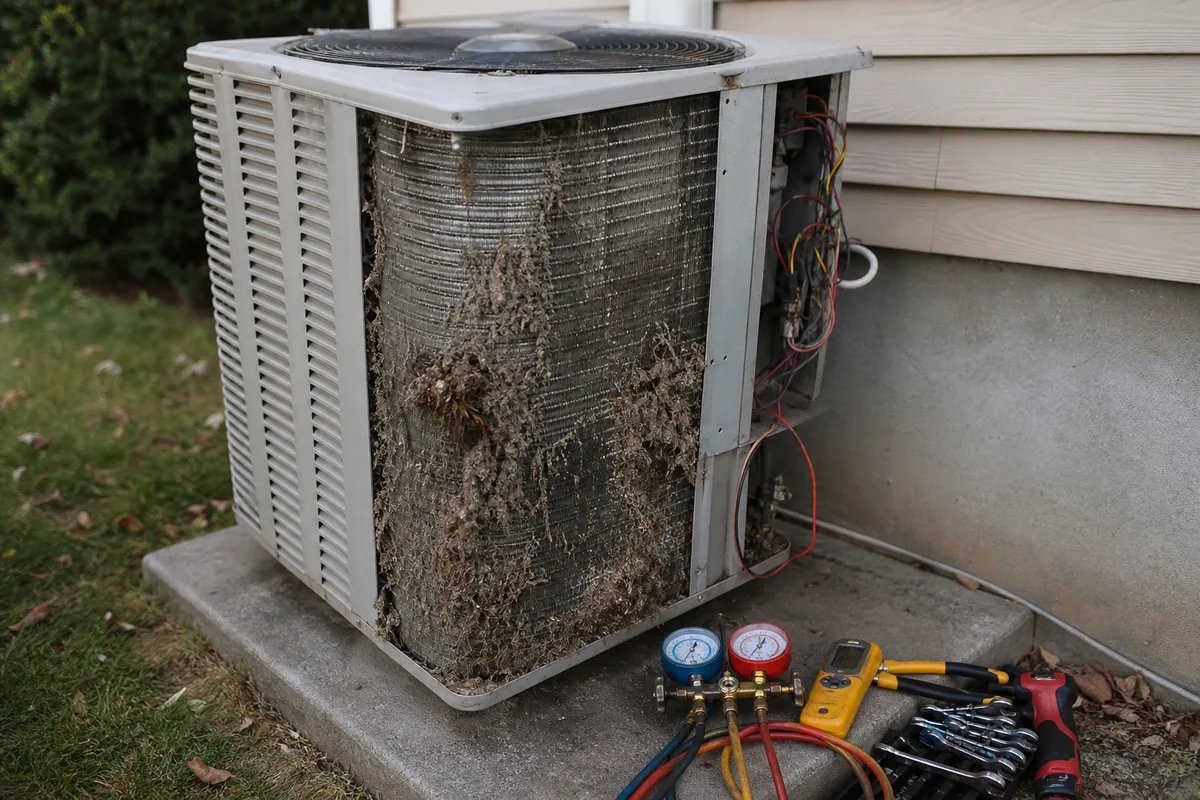
The evaporator and condenser coils in your AC system transfer heat. When they are coated with dust, pollen, and debris, heat transfer becomes less efficient. This is common on Newtown Township homes that sit near tree lines. The system runs longer cycles trying to reach the set temperature. That stresses the compressor, which is the most expensive component in the system. Replacing it often costs more than half the price of a new unit.
Electrical Connections Loosen Over Time
Vibration from normal operation gradually loosens electrical connections inside the air handler and outdoor unit. A technician checks and tightens these during a standard maintenance visit. Left unchecked, a loose connection can trip a breaker or damage the capacitor. In rare cases, it can create a fire hazard. These are slow-developing problems that a single annual visit would catch.
Clogged Condensate Drains Back Up Into the System
Your AC removes humidity from the air and drains that moisture through a condensate drain line. Over a season, algae and debris build up in that line. When it clogs, water backs up into the drain pan and eventually into the air handler. Water damage to the air handler, drywall, and ceilings is a real outcome of a blocked condensate drain. Flushing that line is a routine part of any proper AC tune-up.
What Happens to Your Energy Bills When You Neglect HVAC Upkeep
A poorly maintained air conditioner costs you money every month it runs. According to ENERGY STAR, a dirty air filter alone can reduce system efficiency by 5 to 15 percent. That is not a rounding error. That is a meaningful increase in your monthly utility bill. It compounds over an entire cooling season.
A Dirty Air Filter Makes the System Work Harder
A clogged filter restricts airflow across the evaporator coil. Your system has to run longer to move the same air. In Levittown or Doylestown, that puts extra strain on the blower motor and compressor. Replacing the filter is simple. But many people go six months or more without checking it. Checking and replacing the filter is one of the first things our technicians do on every maintenance visit.
Worn Components Reduce Efficiency Ratings
ENERGY STAR notes that a well-maintained central AC runs near its rated SEER efficiency. A neglected system can drop well below that rating. Say your system was installed at a SEER of 16. Dirty coils and low refrigerant can make it perform like a 12. You end up paying for efficiency you are not getting. An HVAC maintenance plan is the most direct way to keep your system at its designed efficiency.
Longer Run Times Drive Up Demand Charges
Electric utilities in Pennsylvania charge based on consumption. This includes utilities serving the Route 202 corridor in Bucks County. When your AC runs for 20 percent longer cycles, your kilowatt-hour usage climbs. Over a full summer, that difference is real money. An annual tune-up could have saved you that cost.
How a Dirty or Unmaintained System Affects Indoor Air Quality
Your HVAC system is also your home’s primary air filtration and circulation system. When it goes without maintenance, the air you breathe reflects that neglect. The EPA identifies indoor air quality as one of the top five environmental health risks. A dirty HVAC system is a direct contributor.
Mold and Bacteria Grow in Wet Drain Pans
When a condensate drain pan holds standing water, it can breed mold and bacteria. This happens from a slow drain or a blocked line. The air handler blows conditioned air directly over that pan. Whatever grows there gets distributed through your ductwork and into your living space. This matters most in spring and early summer, when outdoor humidity in southeastern Pennsylvania is already high.
Dust and Allergens Accumulate in Ductwork
Dust, pet dander, and allergens build up in dirty ductwork. Every time your system runs, it spreads that buildup around. This is a real health concern, not just a comfort issue. If your ducts have not been inspected in years, get an Air Duct Camera Inspection, Bucks County. It shows you exactly what is inside before you commit to a full cleaning.
A Clogged Filter Bypasses Filtration Entirely
A MERV 13 filter captures up to 98 percent of particles larger than 1 micron. That includes dust, pollen, and some bacteria. But that performance depends on the filter being clean enough to allow airflow. When a filter is so clogged that air bypasses it around the edges, you get zero filtration benefit. Your system then pulls unfiltered air from around the filter frame and sends it throughout the house.
The Real Cost of Replacing an AC Unit That Could Have Been Saved
The most expensive outcome of deferred maintenance is premature system replacement. According to ENERGY STAR, a properly maintained central air conditioner can last 15 to 20 years. Neglected systems routinely fail at 8 to 12 years, sometimes less. That gap means thousands of dollars in replacement costs. A few hundred dollars in annual maintenance could have prevented that.
Compressor Failure Is the Most Common Preventable Loss
The compressor is the heart of the refrigeration cycle. It is also the most expensive single component to replace. Compressor failure often results from low refrigerant, dirty coils, or electrical issues. Routine service catches all of those problems. When a compressor fails on an otherwise reasonable system, you face a tough choice. You can replace the compressor at significant cost, or replace the entire system. Neither option is cheap. Both are often avoidable.
Older Systems Are More Vulnerable Without Service
Is your system more than 10 years old? Has it missed regular service? Your risk of a major failure is much higher. Technicians check the whole system during a tune-up. They look beyond just the obvious items. That check can show you how much life is left. It can also tell you if the system is near the end. Knowing this early lets you plan a replacement. You pick the schedule, not an emergency. You can get an instant HVAC estimate before you are forced into a decision.
Ductless Systems Require Maintenance Too
You may have switched to ductless mini-split systems and assumed they need less maintenance. They do need less ductwork service. But the indoor air handlers still need annual cleaning. The filters and refrigerant lines need regular attention too. Skipping service on a mini-split carries the same risks as skipping it on a central system.
How Ignored Maintenance Voids Your HVAC Manufacturer Warranty
Most HVAC manufacturers require documented proof of annual maintenance to honor warranty claims. This is not fine print that rarely applies. Manufacturers enforce this clause when you file claims for compressor or heat exchanger failures. If you cannot show a service record, the manufacturer can deny the claim, and often will.
What Manufacturers Actually Require
Typical warranty language requires that a licensed HVAC contractor service your system at least once per year. Some manufacturers require specific tasks, such as coil cleaning and refrigerant checks, to be performed and documented. A receipt from a parts store for a filter does not satisfy this requirement. A qualified technician must do the work, and the documentation must reflect that.
Extended Warranties Are Even Stricter
Extended warranties and service contracts often have strict documentation requirements. Missing just one year of documented service can void your coverage. That applies to all the remaining years on the contract. If you still have five or more years of coverage left, that is a serious financial risk.
PA-Licensed Technicians Provide Proper Documentation
Service First HVAC technicians are licensed in Pennsylvania and New Jersey. Every maintenance visit is documented. You get a written record of what was inspected, found, and serviced. Manufacturers require that kind of documentation to honor a warranty claim. It is also useful if you sell your home. Buyers and home inspectors increasingly ask for HVAC service records.
How Service First in Bucks County Handles It
Service First HVAC has been serving Bucks County homeowners since 2009. Technicians are licensed in Pennsylvania and New Jersey. You get the same standard of service in Newtown Township, Yardley, Warminster, and Richboro.
A standard maintenance visit covers the full system. That includes filter check and replacement, coil inspection and cleaning, and refrigerant level check. It also includes condensate drain flush, electrical connection inspection, and thermostat calibration. You get a plain-language explanation of what was found. If something needs attention, you are told what it is, why it matters, and what your options are.
The HVAC maintenance plan is built for homeowners who want to stay ahead of problems. Members get priority scheduling. That matters in July, when every HVAC company in the county is booked out. Preventive maintenance is good for your system, your schedule, and your budget.
Has your system been serviced this season? If not, call Service First HVAC now. You can also schedule online. Do not wait for the next heat wave. Service First HVAC serves Doylestown, Newtown, Yardley, Warminster, and nearby Bucks County areas. You can usually get on the schedule within a few days. Do not wait until your system stops working. Skipping maintenance can cost you more than you expect.
Frequently Asked Questions
How often should I actually have my AC serviced?
Once per year is the standard recommendation, and spring is the best time to do it in Bucks County. Servicing before the cooling season starts means any problems are caught before you need the system running at full capacity. If you have a heat pump that runs year-round, twice-yearly service is worth considering.
Can skipping one year of maintenance really cause that much damage?
It depends on the system’s age and condition. A newer system in good shape can usually tolerate one missed year without major consequences, though efficiency will still suffer. An older system or one that was already showing minor issues is much more vulnerable. One missed year can be the difference between catching a small refrigerant leak and dealing with a failed compressor.
What parts of my system are most likely to fail without regular upkeep?
The compressor and capacitor are the two components that fail most often when maintenance is skipped. The capacitor helps start and run the compressor and fan motors, it is a relatively inexpensive part that a technician checks during every tune-up. The compressor is far more expensive and is usually the result of accumulated stress from dirty coils, low refrigerant, or electrical issues that went unaddressed.
Does my home warranty cover repairs if I haven't kept up with maintenance?
Home warranties and manufacturer warranties are different. A home warranty may cover certain repairs regardless of maintenance history, but it often excludes failures caused by lack of upkeep or improper maintenance. Manufacturer warranties almost always require documented annual service by a licensed technician. If you are unsure what your warranty requires, check the terms or call the warranty provider directly before assuming you are covered.
What is the difference between a tune-up and a full inspection?
A tune-up typically includes cleaning, adjusting, and testing the system’s key components to keep it running efficiently. A full inspection is a more detailed evaluation of the system’s overall condition, often done when a problem is suspected or when a homeowner is buying or selling a home. In practice, a thorough tune-up from a qualified technician covers most of what a standard inspection would address.