
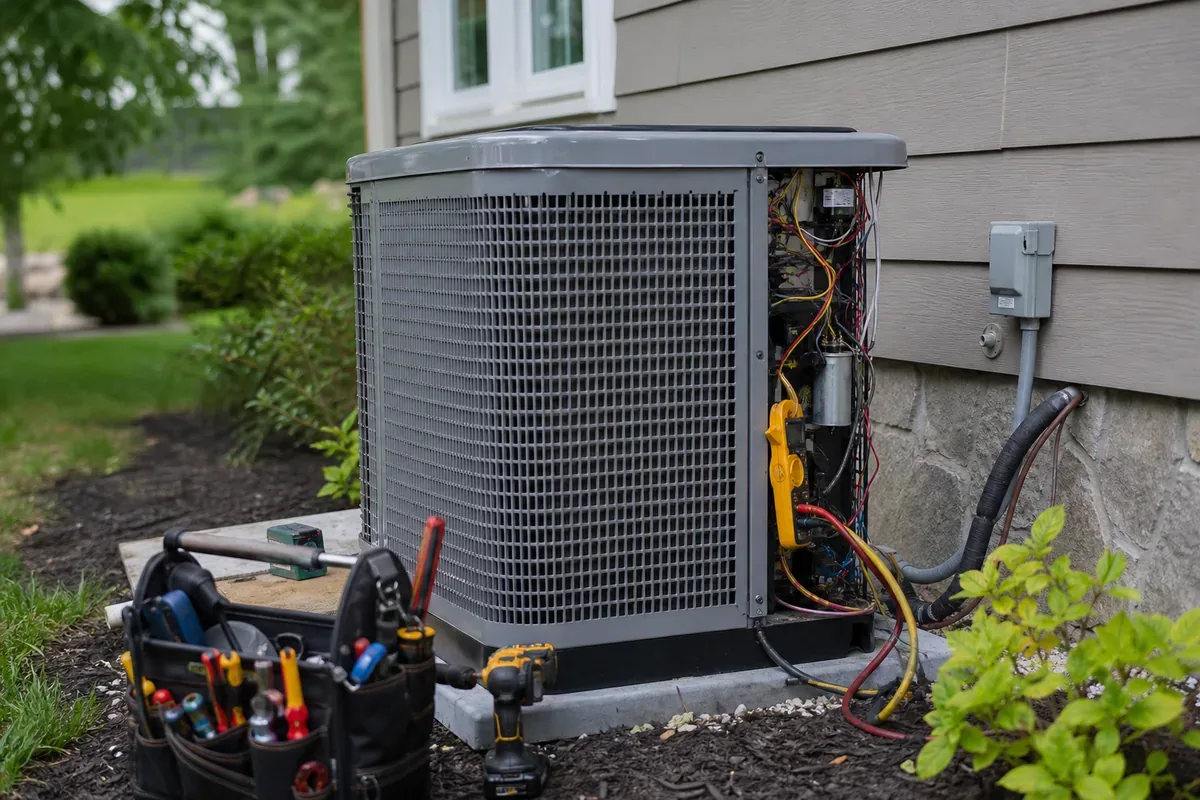
Skipping your annual AC tune-up seems harmless at first. Then the system quits on a 95-degree afternoon in Newtown Township. That moment happens dozens of times every summer along the Route 202 corridor in Bucks County. It is almost always preventable. An unexpected breakdown almost always costs more and takes longer than a scheduled visit. It also disrupts more of your summer. For more, see ENERGY STAR’s home cooling guide.
Quick Answer: Putting off AC maintenance does not save money. It shifts a small, predictable cost into a larger, unpredictable one. Systems that miss annual service are significantly more likely to fail during peak summer heat.
What Delayed Maintenance Actually Means for Your HVAC System
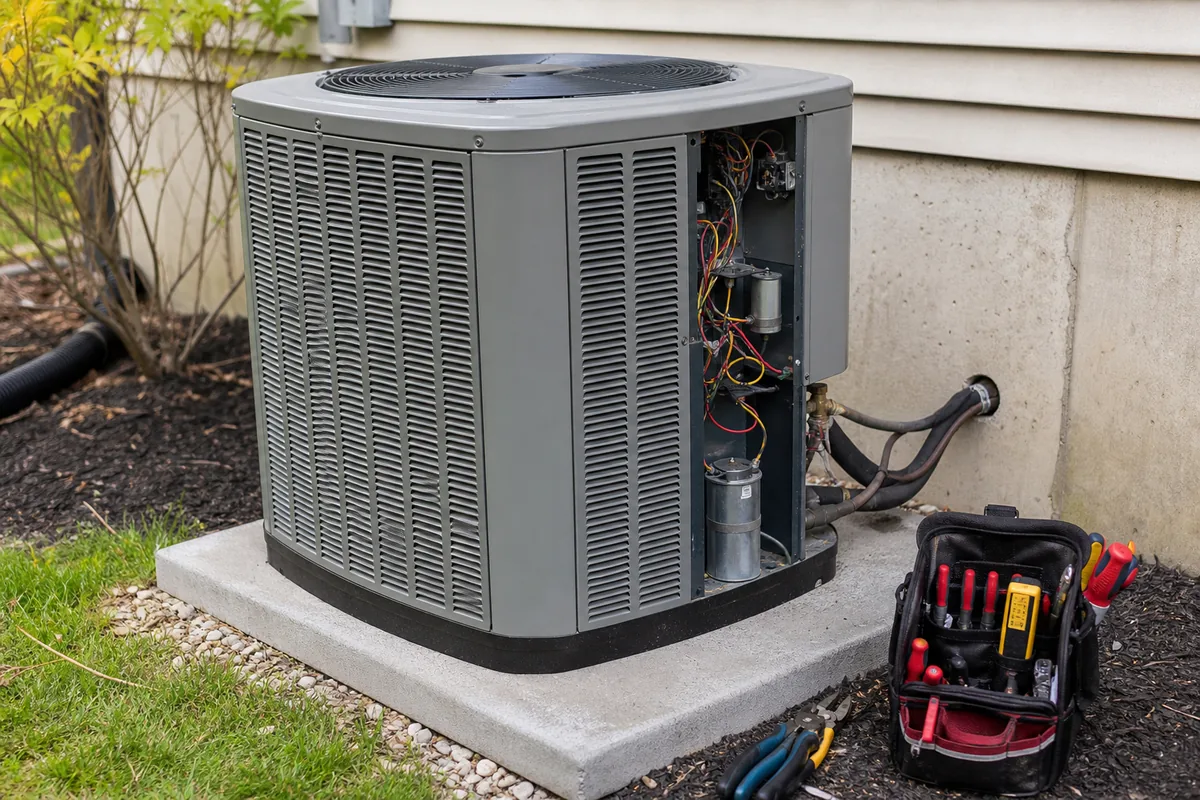
Most HVAC technicians recognize delayed maintenance immediately. It is a homeowner who waits until the system shows a symptom before calling. That is the opposite of scheduled upkeep. It is also the default approach for a large share of households across Doylestown and Newtown Township. Overall, the logic feels reasonable. But if the system is running, why spend money on it?
The problem is that air conditioning systems do not fail suddenly. They degrade gradually, and most of the early warning signs are invisible to the homeowner. Refrigerant charge drifts. Electrical contacts corrode. Capacitors weaken. Coils accumulate a thin film of dirt that forces the compressor to work harder than it should. None of these show up on a thermostat. They show up on your electric bill, and eventually in a breakdown call.
Deferred AC Maintenance Is Not the Same as No Problem
Deferred maintenance is easy to define. It is work that should have been done last spring. The system keeps running, but under more stress. The U.S. Department of Energy says a dirty evaporator or condenser coil can cut efficiency by up to 30 percent. That loss does not announce itself. It quietly adds to your utility bill every month while the problem gets worse.
What Technicians Find on Neglected Systems
A Service First technician visits homes in Doylestown and Warminster often. Some of those homes have skipped two or three tune-ups. The findings tend to be the same each time. Capacitors often read low and are close to failing. Refrigerant levels are slightly off. Condenser coils get blocked by debris and cottonwood. Cottonwood buildup is a real issue in Bucks County every spring. Drain lines run slow or get clogged. Each problem on its own is minor. Together, they cause your system to fail in the middle of the season instead of at the end of it.
The Compressor Is the Part You Cannot Afford to Lose
The compressor is the most expensive single component in a central air conditioning system. It is also the component most damaged by deferred maintenance. Low refrigerant, restricted airflow, or a failing capacitor forces the compressor to work outside its design limits. Compressor replacement, when it is even possible, is one of the most expensive repairs in residential HVAC. Consequently, it often tips the math toward full system replacement instead.
How Waiting Until Something Breaks Costs More Than a Tune-Up
Reactive HVAC service costs more than scheduled upkeep in almost every case. When your system fails on the hottest day of summer, every HVAC company is busy. You are competing for appointment slots with other homeowners who also skipped spring service. That means longer wait times. In some cases, it also means premium pricing for expedited service.
Beyond the scheduling reality, breakdown repairs tend to involve cascading damage. A capacitor that should have been caught during a tune-up fails and takes out the contactor. A refrigerant leak that a routine check would have caught can go unnoticed. Then the evaporator coil freezes and thaws repeatedly. That cycle stresses the copper lines. The final repair bill reflects the original problem plus everything that happened while it ran too long.
The True Cost of a Breakdown Call vs. a Tune-Up
A standard AC tune-up costs much less than most repairs. Emergency calls add up fast. So do replacement parts and after-hours labor. Pricing depends on your system type and home size. Deferred maintenance can also affect the cost. Get an instant HVAC estimate before something breaks down.
Cooling System Upkeep Protects Your Warranty
Many manufacturers require annual maintenance to keep your warranty valid. If your system fails, you may need to show a service record. Without one, the manufacturer may deny your claim. That means you could pay full price for parts. If you live in Newtown Township and your system is under warranty, treat annual service as a requirement.
The Difference Between Reactive Service and Scheduled Upkeep
Reactive HVAC service means you call when something stops working. Scheduled upkeep is different. A technician visits before anything breaks. They check the system against a defined list of performance and safety criteria. Small issues get addressed before they become expensive ones. The difference in outcomes is significant.
Scheduled maintenance visits catch the kind of slow degradation that does not trigger a thermostat alarm. A technician measures refrigerant charge and tests capacitor and contactor health. They also check static pressure, clean coils, and inspect the condensate drain. They verify that the system is cycling correctly. A reactive visit simply aims to restore cooling as fast as possible.
What a Tune-Up Actually Covers
A proper AC tune-up is a systematic inspection and adjustment, not just a filter swap. The technician checks refrigerant levels and looks for signs of leaks. They clean the condenser coil and test electrical components. They also measure airflow across the evaporator and verify the drain line is clear. On older systems, they flag parts showing wear. That gives you a realistic picture of what to expect over the next one to two seasons.
Enrolling in a Maintenance Plan Removes the Decision Entirely
The simplest way to avoid the reactive service cycle is to take scheduling off your plate. Our HVAC maintenance plan covers both your cooling and heating system on a scheduled basis. You never have to rely on memory or a breakdown to trigger a call. Homeowners on a maintenance plan consistently report fewer surprise repairs and longer system lifespans.
Mid-Season Tune-Ups Are Still Worth Doing
Spring passed without a service visit? A mid-season tune-up in July or August still makes sense. It will not fix months of skipped maintenance. But it can catch active problems before they get worse. A tech can check that refrigerant levels are correct. That helps your system handle peak demand. It also gives your system a better shot at finishing summer without breaking down. Waiting until fall is a risk. Your system is already carrying that stress.
Signs Your AC Is Already Past the Point of Simple Maintenance
Some systems have gone without service long enough that a tune-up is not the right first step. The technician needs to assess the system’s actual condition first. That helps determine whether you need a maintenance visit or a repair visit. Knowing the difference before you call saves time and sets the right expectations.
Warm Air Coming From the Vents
Your system may run but blow air that feels only slightly cool or fully warm. That usually means the refrigerant charge is low, or the compressor is struggling. This is not a maintenance symptom. It is a repair symptom. A tune-up will not fix a refrigerant leak or a failing compressor. The technician needs to find the cause first.
Short Cycling
Short cycling means your system turns on, runs briefly, then shuts off and repeats. It is a clear sign something is wrong. It can point to a refrigerant issue, a failing capacitor, an oversized system, or a thermostat problem. Short cycling speeds up wear on every part. A home in Richboro or Southampton that has short cycled for weeks has likely moved past simple maintenance.
Ice on the Coil or Refrigerant Lines
Ice on your indoor coil is a problem. Ice on the copper lines outside is too. It usually means low refrigerant or blocked airflow. Running a frozen system can damage the compressor. If you see ice, turn the system off. Then call for service. This is a repair visit, not a tune-up. You can check our HVAC Services in Bucks County, PA to find the right visit for your situation.
When Skipping the Schedule Makes Sense, and When It Backfires
A small number of situations make skipping a maintenance visit low-risk. A system installed within the past twelve months and running correctly may not need a full tune-up yet. A system recently serviced during a home inspection may already have a current service record. In these cases, skipping one round is not a big risk.
For every other situation, skipping the schedule is a gamble. The older the system, the higher the stakes. Systems eight years or older are past the midpoint of their typical lifespan. Capacitors, contactors, and compressors are the parts most likely to fail. They degrade quietly between service visits.
When the Math Clearly Favors Maintenance
Is your system more than five years old? Has it gone more than twelve months without service? If so, scheduling a visit makes sense. A tune-up costs a predictable amount. A mid-summer breakdown does not. That unpredictability alone is a good reason to stay on schedule. The team at Service First is trained to spot failure points. Catching problems early is almost always the less expensive path.
When Skipping Backfires Most Badly
Skipping AC maintenance tends to backfire in two situations. First, heat waves push your system hardest. Every HVAC company in Bucks County gets fully booked fast. Second, older systems are already close to the edge. According to ENERGY STAR, air conditioners over 10 years old lose efficiency easily. They also break down more often. Skipping maintenance on an older system is risky. It can lead to a full replacement on an emergency timeline. That is the most expensive way to buy a new system.
The Honest Answer on Frequency
The standard recommendation for central air conditioning systems is one tune-up per year, ideally in spring before the cooling season begins. If that window passed, a mid-season visit is the right call. Waiting until fall to address a system already running through a hot summer is the choice most likely to end in a breakdown before the season ends. Learn more about how we approach seasonal service by visiting the About Service First page.
How Service First in Bucks County Handles It
Service First has been serving homeowners across Bucks County since 2009. Our technicians are licensed in Pennsylvania and New Jersey. They know the area and the common system types in local housing stock.
Our tune-up process follows a documented checklist that covers every major component. We measure refrigerant charge, test capacitors and contactors, clean coils, inspect the drain line, and check static pressure. We also verify the thermostat is calibrated correctly. If we find something that needs attention, we explain it clearly before any work is done. No surprise charges, no pressure.
We serve Newtown Township, Doylestown, Warminster, Richboro, Southampton, Yardley, and nearby areas. Has your system gone all summer without service? Call now, before it stops working. A mid-season visit can still help. Your system can run better through the rest of cooling season. It can also be in better shape heading into the following season.
Has your AC run all summer without a service visit? Call Service First HVAC to schedule a diagnostic or tune-up. You can reach customers throughout Bucks County. Service is often available sooner than you expect. Call us or book online.
Frequently Asked Questions
Is it too late to get my AC serviced if summer has already started?
What actually happens if I just wait until my system breaks down to call someone?
How do I know if my HVAC needs a repair versus a full tune-up?
Does skipping one year of maintenance really make a difference?
Can I do any AC maintenance myself before calling a technician?
Delaying AC maintenance in Bucks County is the one saving that reliably costs more than it saves.