
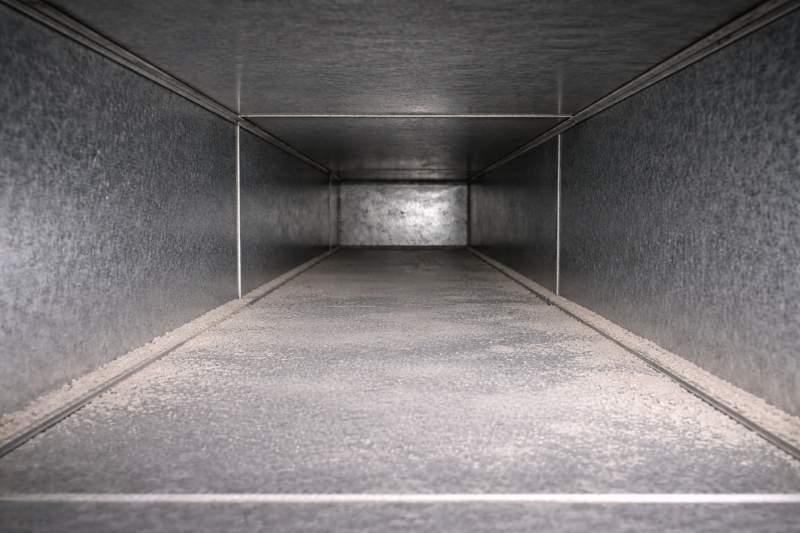
How Renovation Dust Gets Into Ductwork
During construction or remodeling, dust moves easily through the air. If the HVAC system runs during the project, return ducts can pull that dust inside. Even when registers are covered, fine particles can still enter through gaps, returns, or areas that were missed. Common renovation activities that introduce dust include:- Drywall sanding
- Cutting wood, tile, or drywall
- Demolition work
- Floor refinishing
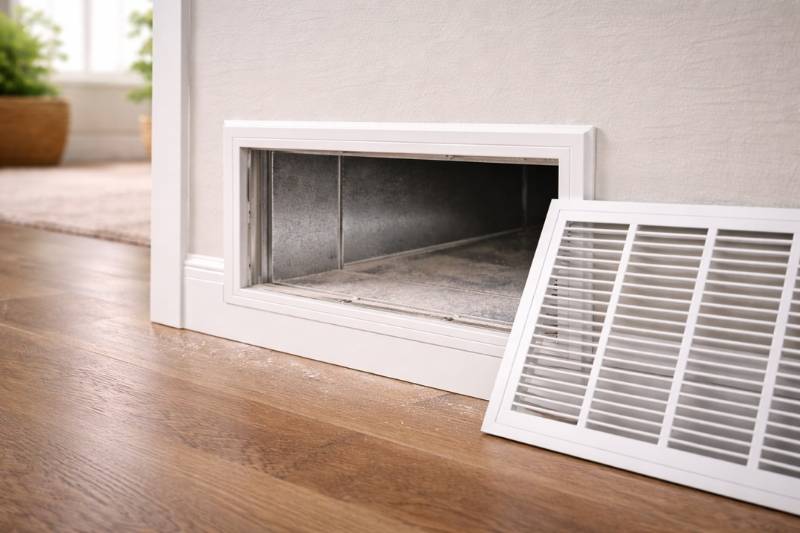
When Duct Cleaning Is Often Recommended After Renovation
Duct cleaning is commonly recommended after renovation when inspection shows visible buildup inside the duct system. Situations where cleaning is more likely to be needed include:- Heavy drywall sanding while the HVAC system was running
- Construction dust visible inside registers
- Debris found in return ducts
- Dust continuing to circulate weeks after the project is complete
When Duct Cleaning May Not Be Necessary
Not every renovation requires duct cleaning. In many homes, dust stays localized and is removed through normal cleaning and filtration. Duct cleaning may not be needed when:- The HVAC system was turned off during the project
- Registers and returns were properly sealed
- Dust is limited to surfaces and not vents
- Inspection shows minimal buildup inside the ducts
Why Inspection Matters After Construction
Dust on furniture or floors does not automatically mean dust is inside the duct system. Visual symptoms alone cannot confirm what is happening inside the ductwork. HVAC technicians inspect ducts through access points and visual evaluation. When additional clarity is helpful, a camera may be used to document interior conditions. This allows homeowners to see whether construction dust actually entered the system. This inspection-first approach follows guidance from the National Air Duct Cleaners Association (NADCA), which recommends evaluating duct conditions before cleaning.What Happens If Construction Dust Is Left in the Ducts
If significant debris remains inside ductwork, it can:- Restrict airflow over time
- Circulate fine particles when the system runs
- Collect in low points of the duct system
Next Steps After a Renovation
If your home recently went through remodeling or construction and dust seems persistent, inspection is the next step. Inspection confirms whether duct cleaning is actually needed and avoids unnecessary services. You can learn more about the full process on our Air Duct Cleaning service page. If you are comparing symptoms, our Signs You May Need Air Duct Cleaning article may also be helpful.What to Do While the Work Is Happening
The cheapest fix is preventing the dust from getting in. That happens during the project, not after.
Ask the contractor to cover supply and return registers in the work area. Plastic and tape is enough.
Run the system as little as you can while sanding or cutting is underway. Every cycle pulls dust into the ducts.
How Long to Wait Once the Crew Leaves
Give it a week or two. Fine dust keeps settling out of the air well after the work stops.
Cleaning too early means doing it twice. We would rather come once and have it hold.
What About the Rest of the System
Renovation dust does not stop at the ducts. It settles on the coil and the blower too.
Cleaning ducts while leaving a coated coil undone gets you part of the benefit. We check both before quoting.
Book duct cleaning after renovation in Bucks County once the dust settles. Call 215-876-0486 or schedule an appointment online.
Frequently Asked Questions
Does every renovation require duct cleaning?
No. Many renovations do not result in duct contamination. Inspection determines whether dust entered the system.
Should ducts be cleaned immediately after construction?
Not automatically. It is better to inspect first and confirm conditions before scheduling cleaning.
How does construction dust get into the ducts?
Dust enters through open or uncovered returns. If the HVAC system runs during the project, it can pull dust deeper into the ductwork.
Can drywall dust damage HVAC systems?
Fine dust can collect in ductwork and filters. If buildup is significant, cleaning may be recommended after inspection.
What if filters were changed during the renovation?
Changing filters helps, but it does not prevent dust from entering ductwork through return air pathways.
Is camera inspection always used?
Not always. Technicians inspect through access points first. Cameras are used when additional visibility is helpful.