
Most Bucks County homeowners do not think about air duct cleaning until something feels off. Maybe airflow seems weaker, dust piles up faster than usual, or one room never quite feels right. Below are the signs HVAC technicians actually look for, and what they tell you.
Quick Answer: Air duct cleaning is a condition-based service, not preventive maintenance. The seven signs below point to when a professional inspection is worth scheduling. Inspection (not automatic cleaning) is always the right first step.
1. Dust Buildup Around Vents
Dust collecting near supply registers may mean debris is building up inside your ducts. This alone does not confirm you need cleaning. Dust comes from many sources, like skin flakes, pet dander, fabric fibers, and outdoor pollen. An inspection matters more than reacting to the dust itself.
Watch for dust returning to flat surfaces within 2 to 3 days of cleaning. This is a stronger signal than dust elsewhere in your home, especially near supply registers.
2. Reduced Airflow From Certain Rooms
When some rooms get noticeably less airflow than others, buildup in the ducts may be the cause. Sometimes the problem is duct design, a closed damper, or an undersized branch run. Cleaning is never a good idea without an evaluation that confirms buildup is the real cause.
Hold your hand a few inches from each supply register. If one feels much weaker than the others, note it. The problem could be in the ducts, the damper, or the air handler.
3. Musty or Stale Odors When the System Runs
Stale or musty smells can come on when your HVAC starts up. Debris, dust, or moisture inside the ducts may cause this. But odors alone do not mean your ducts need cleaning. The smell could come from the evaporator coil. It could also come from the condensate drain. A dead rodent inside a duct is another possible cause. Wet insulation can cause odors too. An inspection helps narrow down the real source.
A musty or earthy odor often points to moisture or mold. A smell more like dust or hot metal usually points to debris or buildup near the heat exchanger.
4. Uneven Temperatures Throughout the Home
If certain rooms consistently feel warmer or cooler than others, restricted airflow may be contributing. Read our deeper post on why some rooms are colder than others for the full diagnostic. Duct cleaning is only recommended when buildup is confirmed as part of the problem. In many uneven-heating cases, the real fix is duct sealing, damper adjustment, or a zoning system, not cleaning.
5. Visible Debris or Pet Hair in Registers
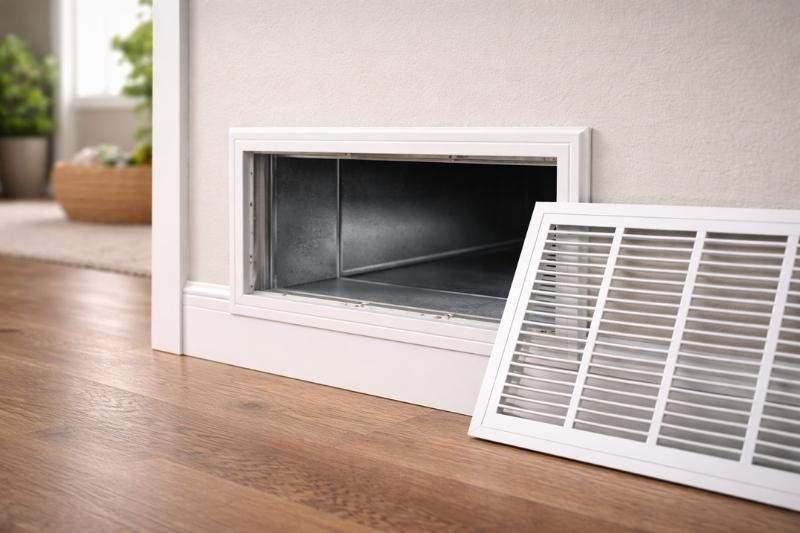
Pet hair, dust clumps, or construction debris inside your registers can mean buildup deeper in the ducts. This is one of the clearer signs that an inspection is worth doing. Remove a register cover with a screwdriver. Shine a flashlight inside and look at the first foot of duct. Visible buildup that close to the opening usually means there is more deeper in.
6. Excess Dust After Remodeling or Construction
Renovation projects push fine dust deep into your ductwork. Drywall sanding, cutting tile, demolition, and floor refinishing all send fine particles into the air. That particulate gets pulled into return registers and deposited along the entire duct path. This is one of the most common reasons Bucks County homeowners schedule an inspection.
You can read more in our post on duct cleaning after renovation. The short version: tape off the return registers during work. Replace the filter the day construction ends. Schedule an inspection a week later if dust levels feel off.
7. The Ducts Have Never Been Inspected
Many homes go years without anyone inspecting the ductwork. That does not mean cleaning is needed right away. But an inspection can tell you where things stand. Older Bucks County colonials and Victorians retrofitted for central HVAC are the most common candidates.
For most homes, an inspection every 3 to 5 years is reasonable. Homes with pets, allergies, or recent renovation work benefit from more frequent inspections.
What These Signs Do Not Mean
The signs above do not guarantee that duct cleaning is required. Comfort issues, dust, and airflow problems can have multiple causes. Those include a dirty filter, a closed damper, a failed blower motor, or undersized ductwork. Cleaning is only suggested when an inspection shows actual buildup affecting system performance.
This inspection-first approach follows guidance from the National Air Duct Cleaners Association (NADCA). They suggest evaluating duct conditions before any cleaning work begins.
How HVAC Technicians Confirm the Need for Cleaning
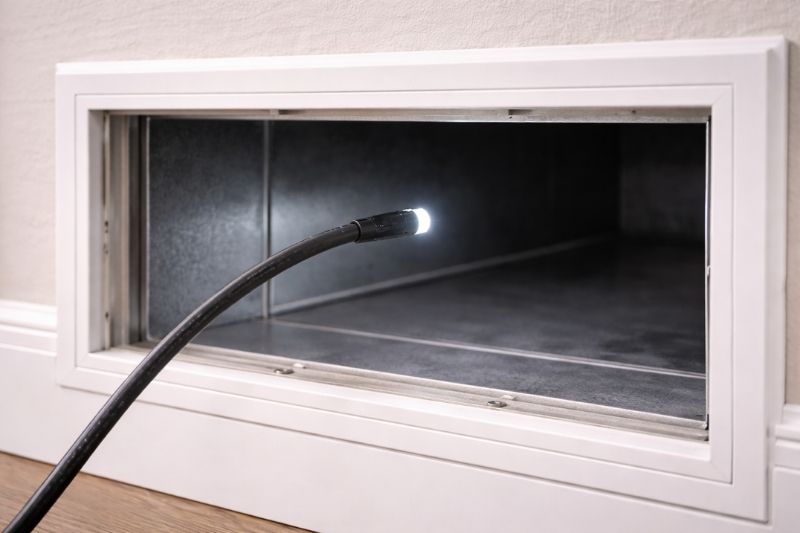
Technicians inspect ductwork through access points and visual evaluation. When more visibility is helpful, an inspection camera is used to document interior conditions. The technician maps the duct layout, measures airflow at each register, and identifies any leaks, blockages, or buildup. From there, the recommendation is specific: target the actual issue rather than running a blanket “system cleaning.”
This lets homeowners see what is happening inside the system rather than relying on the technician’s word alone. It also makes the line between necessary work and unnecessary upsells very clear.
What Duct Cleaning Costs in Bucks County
Professional duct cleaning in Bucks County typically falls in the $400 to $1,200 range. The price depends on home size, duct complexity, and the scope of work confirmed by inspection. A standard inspection visit is usually under $200. That cost often goes toward cleaning if cleaning is recommended. Be skeptical of any company quoting a flat whole house duct cleaning price under $100 sight unseen. That is usually a bait-and-switch where the real price climbs quickly once they arrive.
When to Schedule an Air Duct Inspection
If several of the signs above sound familiar, the next step is inspection, not automatic cleaning. Inspection confirms whether duct cleaning is actually needed and sets clear expectations on cost and scope. You can read more about the process on our Air Duct Cleaning service page.
Call Service First at (215) 876-0486 for an inspection, or schedule online. We serve Newtown, Doylestown, Yardley, Richboro, Warminster, Langhorne, and the rest of Bucks County. Service First has handled Bucks County HVAC since 2009.
FAQs
How do I know if my air ducts really need cleaning?
The honest answer: you cannot know from outside the system. The signs above suggest you should book an inspection. The inspection (visual, camera if needed, airflow measurement) confirms whether buildup is actually affecting performance. If the inspection shows clean ducts and the comfort issue is elsewhere, cleaning will not help.
How often should I have my air ducts cleaned?
There is no set schedule. Cleaning is condition-based, not calendar-based. Most homes benefit from an inspection every 3 to 5 years. Cleaning is suggested only when the inspection shows it is needed.
Is air duct inspection different from air duct cleaning?
Yes. Inspection is the diagnostic step that determines whether cleaning is needed. Cleaning is the work that follows when buildup is confirmed. Any reputable HVAC company starts with inspection. Companies that lead with cleaning packages are usually selling the work, not solving a problem.
Do dirty ducts affect my furnace or AC efficiency?
Heavy buildup in ductwork can restrict airflow, which makes the furnace or AC work harder. In severe cases this leads to short cycling, higher energy bills, and shorter equipment life. Light dust in the ducts has minimal impact on efficiency.
Can dirty ducts cause allergies or asthma flare-ups?
Possibly, but the link is not as strong as some companies claim. Most indoor air quality problems are better fixed at the air filter or the HVAC system itself. Good home sealing also helps. EPA guidance says duct cleaning has not been shown to prevent health problems in most cases. If allergies are your concern, start with a HEPA-grade filter cabinet. A whole-home air cleaner is another good first step before you book duct work.
Frequently Asked Questions
How do I know if my ducts actually need cleaning?
The most reliable way is inspection. Symptoms like dust, odors, or weak airflow can have multiple causes. An inspection confirms whether debris inside the ductwork is significant enough to recommend cleaning. Learn more about the process on our Air Duct Cleaning page.
What are the most common signs technicians look for?
The most common triggers are visible debris in registers, dust buildup around vents, airflow differences between rooms, and heavy dust after remodeling. This article covers the most typical signs homeowners notice first.
Does dust around vents always mean my ducts are dirty?
Not always. Dust can come from indoor activity, leaky returns, filtration issues, or normal household dust. It can be a reason to inspect, but it does not automatically mean duct cleaning is needed.
Is duct cleaning something I should do on a schedule?
Usually, no. Most homes do not need duct cleaning on a routine schedule. Cleaning should be based on the condition of the duct system, not a calendar.
Can remodeling dust get into the ductwork?
Yes. Drywall sanding and demolition dust can settle deep in ducts, especially if the system ran during the project. If that applies to your home, read Duct Cleaning After Renovation.
Will duct cleaning fix uneven temperatures or weak airflow?
Sometimes, but not always. If airflow is restricted by debris inside the ductwork, cleaning can help. If the cause is duct design, dampers, leaks, or equipment issues, cleaning may not change the result. Inspection identifies the real cause first.
Does duct cleaning improve indoor air quality?
Duct cleaning removes debris inside ductwork. Results vary depending on the home, filtration, duct condition, and how much buildup is present.
Do you always use a camera inspection?
Not always. Technicians inspect through access points and visual evaluation first. When additional visibility is helpful, a camera is used to document conditions. For service details, see Air Duct Cleaning.