
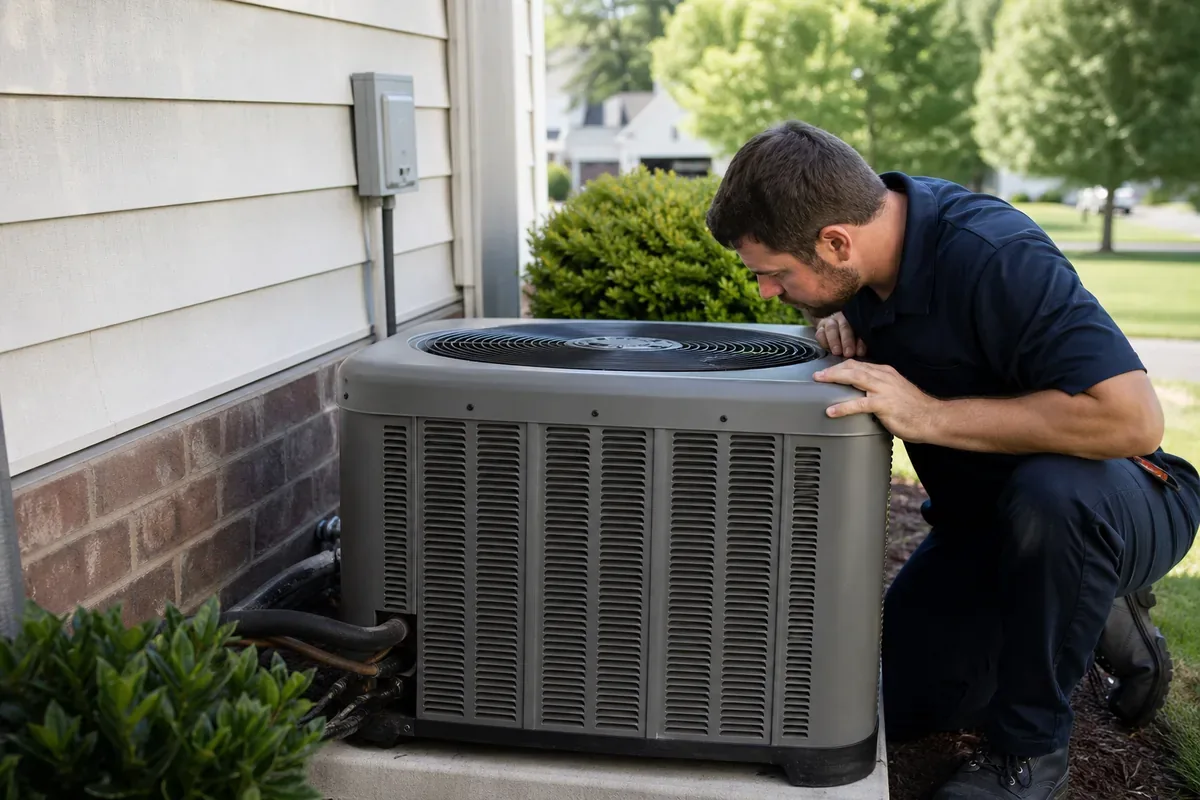
Most central air systems in Doylestown run four to five months straight. In fact, the ones that fail in July almost always skipped their tune-up. AC maintenance is not just a filter swap. It is a full system check, so it catches small problems before they turn expensive. Is your system heading into another summer without a professional inspection? Here is what you need to know.
Quick Answer: A real AC tune-up covers refrigerant levels, electrical connections, coil cleaning, and airflow, not just the filter. Schedule one before Doylestown temperatures climb past 85 degrees. Overall, annual AC maintenance keeps your system efficient and reliable all summer.
What AC Maintenance Actually Includes (Beyond Changing the Filter)
Many homeowners think AC maintenance means a quick filter swap. However, a real tune-up goes much further. It covers every major part that affects how your system cools and how long it lasts.
Refrigerant Level Check
Refrigerant moves heat out of your home. When a slow leak lowers the level, your AC works harder and cools less. A technician then checks the pressure with gauges and confirms a proper charge. In fact, low refrigerant is a top cause of warm air from the vents in July.
Electrical Component Inspection
Capacitors, contactors, and wiring wear down over time, and Doylestown summers push them especially hard. A tech checks voltage and amperage at the compressor and fan motors, then tightens loose connections and tests the capacitor. As a result, you avoid many no-cool calls in late July and August. Still, most failures show warning signs weeks before the system quits.
Coil Cleaning
Both coils collect dirt over time, inside and out. A dirty evaporator coil restricts airflow and can ice up. Likewise, a dirty condenser coil traps heat and makes the compressor run hotter. In fact, the U.S. Department of Energy says dirty coils can cut efficiency by 5 to 15 percent. So coil cleaning belongs in any complete tune-up.
Condensate Drain Flush
Your AC pulls moisture from the air, and the condensate drain carries it away. Along the humid Route 202 corridor, that drain can clog with algae in weeks. A clog then backs water up into the air handler, where it can ruin insulation, drywall, and flooring. So flushing the drain line is a simple step that prevents an expensive repair.
Blower and Airflow Assessment
The blower motor pushes cooled air through your ducts. A tech checks the motor’s amperage and inspects the blower wheel for buildup. They then confirm that air reaches every zone of the house. For example, older colonial homes in Doylestown Borough often have uneven duct layouts. Catching that during maintenance prevents hot rooms all summer.
How Often Should Doylestown Homeowners Schedule AC Tune-Ups
NATE-certified technicians recommend one tune-up per year. Aim for early in the season, before the first heat wave. For most New Britain Township homes, that means booking before the first hot stretch. However, if you missed that window, schedule now anyway. During peak heat, emergency no-cool calls always jump ahead of tune-ups.
Systems Over 10 Years Old
Older systems do better with two checks a year, spring and fall. Because parts wear faster as a system ages, a fall visit catches anything that degraded over the summer. Is your system over 10 years old with no recent inspection? Schedule one now, whatever the season.
High-Use Homes and Multi-Story Houses
Does your AC run more than eight hours a day in summer? Then annual maintenance is the minimum, not an option. For example, multi-story homes in Warminster and Richboro often run nonstop during July heat waves. More runtime means more wear, so check-ups need to happen more often.
Homes on an HVAC Maintenance Plan
The easiest way to stay on schedule is our HVAC maintenance plan. It handles the scheduling for you. You also get priority service if something goes wrong mid-season. Best of all, it removes the guesswork and keeps your system covered year-round.
What Happens to Your AC When Summer Humidity Peaks in Bucks County
Humidity is the factor most homeowners underestimate. In July and August, Bucks County humidity often climbs above 60 percent. On those days, your AC has to pull moisture from the air before it can cool. As a result, a system low on refrigerant or running on dirty coils will struggle.
Coil Icing and Reduced Airflow
High humidity plus a dirty evaporator coil can freeze the coil. Ice then blocks airflow completely, so the system blows warm air or none at all. However, homeowners often blame refrigerant when the real cause is a coil that needed cleaning months ago.
Compressor Overheating
The outdoor unit rejects heat to the air outside. When it is 90 degrees out and the condenser coil is dirty, the compressor runs hot. As a result, sustained overheating shortens its life fast. A compressor swap is one of the priciest repairs on a central air system. In fact, the Department of Energy calls the compressor the most critical and costly part.
Humidity Bleeding Into Living Spaces
Sometimes a system cannot keep up with the moisture load, so your home feels clammy even at 72 degrees. Maintenance fixes this directly. A proper refrigerant charge, clean coils, and a clear drain all improve dehumidification. If your home feels sticky while the AC runs, that is a sign it needs attention soon.
How to Spot a Thorough AC Maintenance Visit
Not every tune-up is equal. Maybe a tech came out and you are not sure they did the full job. Here are a few ways to check.
Ask for a Written Report
A thorough visit produces a written summary. It should list the refrigerant readings, the electrical measurements, and any flagged parts. Got no paperwork? Then the visit was probably surface-level. By contrast, Service First leaves a written report after every tune-up, so you keep a record of your system’s condition.
Check Whether the Tech Cleaned the Coils
After a real tune-up, the outdoor unit looks noticeably cleaner. The fins sit straight, the cabinet is clear, and the coil surfaces show. If the unit looks exactly as it did before, the tech likely skipped the coils. In short, coil cleaning separates a real tune-up from a quick look.
Confirm the Tech Flushed the Condensate Drain
Ask the tech directly about the condensate drain. Did they flush it and test the float switch? The float switch shuts the system down if the drain pan fills. However, if neither happened, your home risks water damage in the months ahead. Either way, our AC repair services team handles drain issues during maintenance and emergency calls.
What a Skipped Tune-Up Costs You by August
The math on annual maintenance is simple. A neglected system loses efficiency every year, often 5 to 10 percent. As a result, that shows up as a higher utility bill every month it runs. For example, a system at 80 percent efficiency costs much more to run than a clean one.
Emergency Repair Calls
Emergency HVAC calls in July and August cost more and take longer. A weak capacitor is a routine fix during a tune-up. However, skip that tune-up, and it becomes a no-cool emergency on the hottest day. As a result, you pay premium rates, and your home sits hot for hours.
Shortened System Lifespan
A well-maintained central air system lasts 15 to 20 years. By contrast, neglected systems often fail before year 12. Replacing one years early costs far more than any number of tune-ups. If your system is near the end of its life, our AC installation services team can walk you through the options first.
Warranty Implications
Many manufacturer warranties require documented annual maintenance. So if you skip it, a denied claim can leave you paying full price for a covered repair. In fact, the warranty often requires a maintenance record, not just good intentions. Keep every service report.
Efficiency Losses Add Up
PECO and PPL customers pay for every kilowatt-hour their AC draws. A system running inefficiently pulls more power for the same cooling, so the cost adds up over a four-month season. Instead, a newer, ENERGY STAR certified system cuts that draw. For a fast estimate, try our instant HVAC pricing tool, or compare ductless mini-split systems for low-draw cooling.
How Service First in Bucks County Handles It
Service First HVAC has served Bucks County since 2008. Our technicians are NATE-certified and PA-licensed, and we never use subcontractors. So every tech who arrives in Doylestown, Warminster, or Newtown is a trained Service First employee. They know the local housing stock.
Our tune-up follows a complete checklist. First, we take refrigerant readings, test the electrical at the compressor and fan motors, and check the capacitor. Next, we clean both coils, flush the condensate drain, and inspect the blower and airflow. Then we document everything and walk you through the findings before we leave. If we find a problem, we explain it plainly and lay out the options, with no pressure and no upselling.
For homeowners in Richboro, Southampton, and along the Route 202 corridor, we offer same-day and next-day scheduling. Getting ahead of the rush means faster appointments and a system ready before the first 90-degree day. We also offer heat pump service for homes that run heat pumps year-round.
Has your system gone without an inspection this year? Now is the time to book it. Service First serves Doylestown, Newtown, Warminster, Richboro, Southampton, Yardley, and nearby Bucks County. Call Service First at (215) 876-0486 or schedule online, and get your AC tune-up on the calendar before summer demand peaks.
Frequently Asked Questions
How long does a typical AC tune-up take from start to finish?
A thorough AC tune-up takes between 60 and 90 minutes for most standard central air systems. Larger homes or systems with additional components may take a bit longer. If the technician finds issues that need repair, the time will extend depending on what is needed.
Can I do any part of the maintenance myself, or does it all need a technician?
Homeowners can safely change the air filter, clear debris from around the outdoor unit, and check that the condensate drain line is not visibly blocked. Everything else, refrigerant checks, electrical testing, coil cleaning, and blower inspection, requires a licensed technician with the right tools and training. Attempting refrigerant work without EPA certification is illegal.
Does my AC warranty require professional maintenance to stay valid?
Most manufacturer warranties require documented annual professional maintenance to remain in effect. If you file a warranty claim and cannot show maintenance records, the claim may be denied. Always keep a copy of your service report after each tune-up visit.
Why does my system seem to struggle more on humid days even after a recent tune-up?
High humidity increases the latent load on your AC, the system has to remove moisture from the air before it can cool it. If the system is undersized for your home or the refrigerant charge is slightly off, humid days will expose that weakness. It is also worth checking that the condensate drain is clear, since a partial clog reduces the system’s ability to remove moisture.
How do I know if my AC needs refrigerant added?
Common signs of low refrigerant include warm air from vents despite the system running, ice forming on the refrigerant lines or evaporator coil, and the system running longer than usual to reach the set temperature. Only a licensed technician can check refrigerant pressure and legally handle refrigerant.
When is the best time to schedule an AC tune-up?
The best time is before your system starts working its hardest, which for cooling means getting on the schedule ahead of the summer heat. Booking early means shorter wait times and a chance to catch small problems before they become a mid-season breakdown. That said, a tune-up is worthwhile at any point in the year; what matters most is doing it consistently. One professional tune-up annually keeps your system efficient, extends its lifespan, and keeps your maintenance records current for warranty coverage.