
One room feels comfortable while another stays cold. That is called uneven heat. It is a common winter complaint in Bucks County. It usually has nothing to do with a broken furnace.
Quick Answer: A single cold room is almost always a distribution problem. It is not a furnace problem. Check the filter and confirm vents are open. Check for a closed damper and look at insulation in the cold room. If those check out, you likely have an airflow or duct sizing issue. You will need a tech for that.
The good news: most of these issues are fixable without replacing the furnace.
How Heat Is Supposed to Move Through a Home
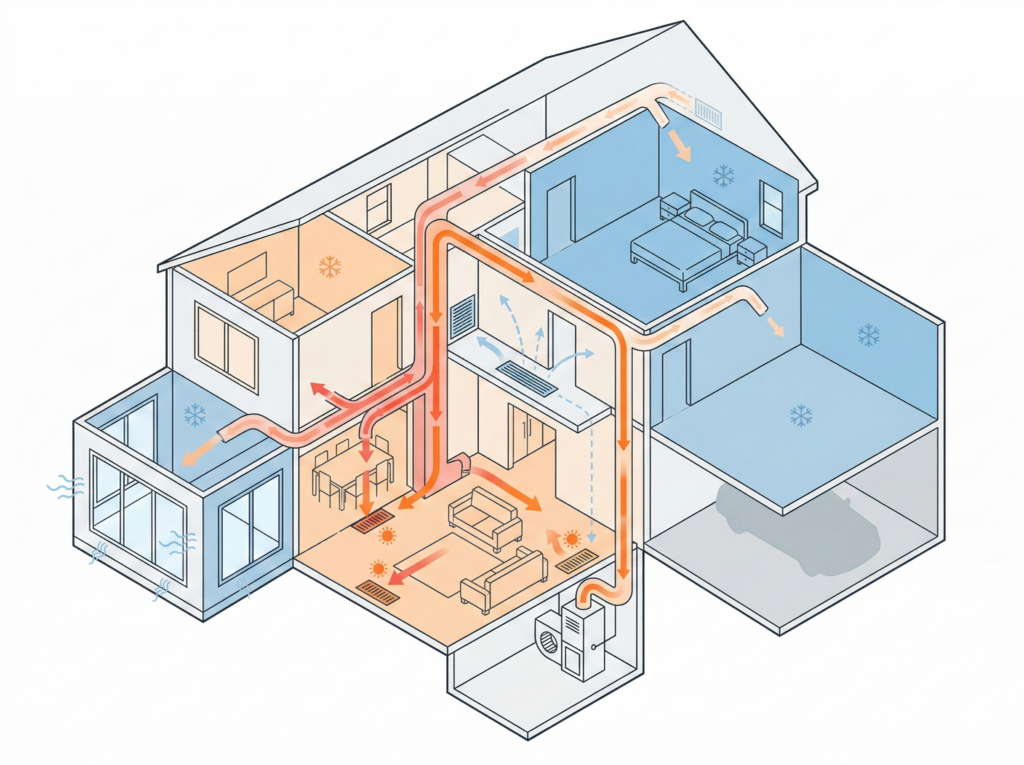
A furnace produces warm air. Comfort depends on how evenly that air reaches each room. Ductwork, airflow balance, insulation, and room layout all play a role. When everything works together, rooms warm at a similar pace. When something is off, certain areas heat faster while others lag behind.
Why Uneven Heat Gets Worse in Winter
Cold weather magnifies small imbalances. As outdoor temperatures drop, heat loss increases in certain parts of the home. The rooms that lose heat fastest are usually:
- Upper floors
- Rooms over garages
- Exterior-facing rooms with two or three outside walls
- Older additions or finished spaces that were not part of the original duct design
- Rooms with large windows or sliding doors
During mild weather, these differences may go unnoticed. In a Bucks County January, they become obvious.
Patterns Behind Uneven Heating
Rather than listing isolated causes, it helps to recognize the four patterns that produce uneven heat.
Airflow Imbalance
Warm air follows the path of least resistance. Some rooms get stronger airflow and heat faster. Closed vents, undersized ducts, or long duct runs can all cause an imbalance. A room at the end of a long duct run often gets less warm air. A room closer to the furnace gets more.
Heat Loss Differences
Rooms with more windows, older insulation, or exterior walls lose heat faster. The system may be sending warm air correctly, but the room cannot hold it. Older Bucks County colonials often see this in the front sitting room. The bedroom over the porch is another common spot.
Return Air Limitations
Return vents pull cold air back to the furnace. Poorly placed returns cause problems. So do returns blocked by furniture or closed off in finished spaces. Warm air cannot circulate properly. Your supply registers may feel hot. But your rooms can still feel cold.
System Run Behavior
Homes with furnace short cycling never give warm air enough time to spread evenly. The system shuts off too soon. Closer rooms warm up, but far rooms never get there.
According to Trane guidance on airflow and comfort balance, uneven heating is usually a distribution problem. It is not a furnace problem.
Why Specific Rooms Stay Cold
Some rooms come up over and over in our service calls. Here is what is usually happening in each.
A Baby or Nursery Room Stays Colder Than the Rest of the House
Most nurseries sit on a second floor, often above a garage or porch. Both spots tend to have weak insulation. Check the floor for cold spots. Look at ductwork in the basement or crawlspace below for damage or disconnects. Confirm the supply register is fully open. A small portable heater can help short term. A duct repair or insulation upgrade is the real fix.
One Bedroom Is Always Colder Than the Others on the Same Floor
This usually points to airflow imbalance or a closed damper inside the duct trunk. The damper is the small metal handle on the side of the duct in the basement. If it is closed or partially closed, that branch of the system gets less airflow. Open it fully and re-test.
The Whole Second Floor Stays Cold
This is a classic single-system problem in two-story Bucks County homes. Heat rises naturally, but in winter you want it to circulate. A second-floor return vent, a duct booster, or a zoning system can each help. In some homes, a ductless mini-split in one upstairs room is the cleanest fix.
The Room Over the Garage Is Freezing
Garages are not heated. The floor of the room above sends heat down through the garage ceiling all winter. Insulating the garage ceiling can help. You can also add a ductless mini-split. It gives that one room its own heat source without affecting the rest of your home.
What to Check Yourself First
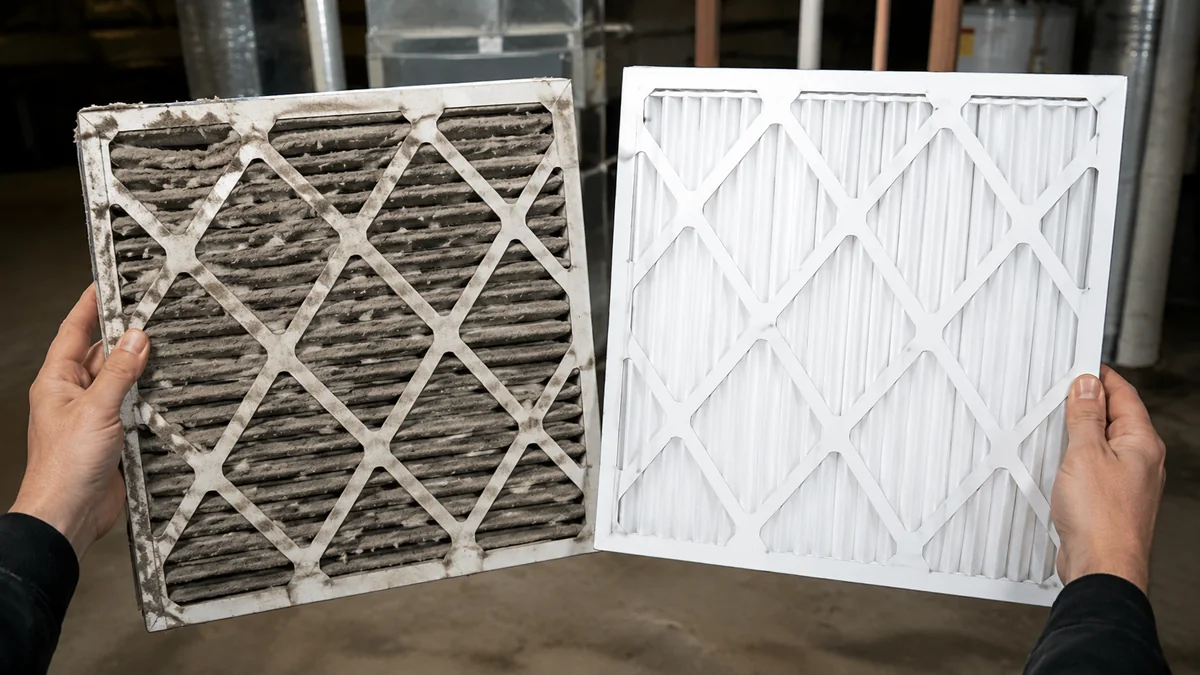
Before you call us, run through this short list. Most cold-room cases can be improved with these five checks.
- Replace the furnace filter if it is older than 90 days. A dirty filter chokes airflow to every room.
- Open all supply vents fully. Even one closed register can throw off balance in nearby rooms.
- Confirm return vents are not blocked by furniture or rugs.
- Find the duct dampers in your basement. Check that the branches feeding the cold rooms are fully open.
- Run the fan in the on position (not auto) for 30 minutes. This mixes air across rooms and tells you if the problem is run time vs. distribution.
When a Zoning System or Mini-Split Makes Sense
If your home has chronic uneven heat after the checks above, two upgrades typically solve it for good.
Zoning Systems
A zoning system divides your home into separate heating areas. Each area has its own thermostat. Your furnace sends warm air only to the zones that need it. Bucks County two-story homes are great candidates for zoning. The upstairs and downstairs often need different amounts of heat at different times of day.
Ductless Mini-Splits
A ductless mini-split heats and cools one room. It needs no ductwork at all. It works well in rooms over garages, finished basements, sunrooms, and additions. Those spaces often never got connected to your main system. In many cases, one mini-split costs less than redoing your duct runs.
Why Uneven Heat Can Change From Year to Year
Home comfort is dynamic. Furniture moves. Insulation settles. New windows go in. A home that felt evenly heated last winter can feel different this year with the same system. If you noticed a change, think about what is different in the house since last winter. The answer often points to the fix.
How Uneven Heat Connects to Other Heating Symptoms
Uneven temperatures are sometimes the first sign of broader performance issues. Homes with airflow imbalance may later experience rising heating bills as the system works harder to compensate. Spotting uneven heat early helps catch comfort problems before they escalate.
When to Have It Looked At
Uneven heat is worth a service call when:
- The same rooms are consistently colder, winter after winter
- Adjusting vents and dampers does not improve comfort
- Temperature differences get worse during cold snaps
- You hear airflow rushing through some vents but barely any in others
- Energy bills are climbing while comfort is dropping
A professional evaluation from our heating service team can find airflow or duct issues that testing reveals. Service First has worked on Bucks County homes since 2009. These patterns show up every winter, and most can be fixed in a single visit.
Get Comfort Back This Winter
If one room stays cold no matter what you try, do not just turn the thermostat higher. That wastes energy and still leaves you uncomfortable. Call Service First at (215) 876-0486 for a heating evaluation, or schedule an appointment online. We serve Doylestown, Newtown, Yardley, Richboro, and the rest of Bucks County.
FAQs
Why is my baby’s room colder than the rest of the house?
Nurseries are usually on a second floor and often above a garage or porch. Both spots lose heat fast. Check for closed dampers, an open or undersized supply vent, and insulation gaps in the floor. A short-term fix is a small space heater. The real fix is duct balancing, better insulation, or a ductless mini-split for that room.
Will closing vents in unused rooms push more heat to the cold ones?
No. Closing vents adds back-pressure to the system and reduces overall airflow. It can also damage your furnace over time. Keep all vents fully open. If you need more heat in one room, adjust the damper in the duct trunk. Do not close the register.
How long should a furnace run to even out the temperature?
A typical heating cycle runs 10 to 15 minutes. If your furnace shuts off after 5 minutes, warm air never reaches the far rooms. Short cycles point to a furnace, airflow, or thermostat issue. You should have a tech take a look.
Is a zoning system worth the cost in a Bucks County two-story home?
For most two-story homes with a chronic upstairs-downstairs imbalance, yes. Zoning typically pays for itself in 5 to 7 years through lower energy bills. It also ends the daily thermostat battle. The exact cost depends on your system and ductwork.
Can a ductless mini-split heat my room over the garage?
Yes. Modern ductless units can heat and cool efficiently down to about 5 degrees Fahrenheit outside. That covers almost every winter day in Bucks County. Adding one unit to a cold room can cost less than re-running ductwork to that space.
Frequently Asked Questions
Is uneven heat normal in older homes?
It’s common, but not inevitable. Older homes often have insulation or duct design challenges that can be improved.
Can closing vents help balance temperatures?
Sometimes, but closing vents too much can create airflow problems elsewhere in the system.
Does uneven heat mean my furnace is too small?
Not always. Many uneven heating issues are related to ductwork or heat loss, not furnace size.
Why are upstairs rooms colder in winter?
Heat loss through roofs and exterior walls often outpaces heat delivery upstairs during cold weather.
Will maintenance fix uneven heating?
Maintenance helps system performance, but comfort balance often requires airflow or insulation adjustments.