
When Is the Best Time to Clean Your Air Ducts in Newtown?
The National Air Duct Cleaners Association (NADCA) has a guideline for duct cleaning. They say you should clean your ducts every 3 to 5 years. That is under normal conditions. In Bucks County, humidity often goes above 70%. That is the case through most of the cooling season. Many homes here have ductwork from the 1970s through 1990s. Because of that, every 2 to 3 years is more realistic for you. The best time to schedule is April through May. That gets it done before AC season starts. September through October is also a good window. That timing comes before heating season begins.
Most people wait until the signs are hard to ignore. You might see dust pouring from vents. You might notice allergy symptoms when the blower kicks on. A musty smell that will not go away is another sign. By then, your ducts have been pushing contaminated air for months. Timing your air duct cleaning around specific triggers works better than waiting for problems.
The EPA does not mandate a fixed schedule because every home is different. Homes with pets, smokers, or recent renovations need cleaning more frequently. Here are the situations that should move you to act.
Five Situations That Call for Immediate Duct Cleaning
Scheduling based on a calendar is a starting point, but real-world conditions in your home matter more. Here are five situations where you should not wait.
1. After a Renovation or Construction Project
Drywall dust, sawdust, and construction debris are some of the worst things for ductwork. Fine particles get into the system even with plastic sheeting and closed vents. If you finished a kitchen remodel or bathroom renovation, your ducts likely have debris. Sanding and painting projects cause the same problem. Your standard air filter cannot catch all of it. Read more in our guide on duct cleaning after renovation or construction.
2. Visible Mold on or Near Vent Registers
Mold around supply registers or inside visible sections of ductwork is a serious concern. Humidity in this area regularly tops 70% during summer months. Older homes with poor attic ventilation or crawlspace moisture problems are especially at risk. Surface mold you can see often points to deeper growth inside the ducts. That kind of growth needs professional removal and sanitization.
3. Persistent Allergy or Respiratory Symptoms Indoors
If family members experience sneezing, congestion, or worsening asthma symptoms that improve when they leave the house, contaminated ductwork is a likely contributor. Dust mites, pet dander, pollen, and mold spores accumulate in duct systems and recirculate every time your HVAC runs. Our indoor air quality services address these issues at the source, not just the symptoms.
4. Rodent or Insect Activity in the Home
Pest droppings and nesting material can get inside your ducts. Insect debris causes odor and air quality problems too. If mice, squirrels, or insects got into your attic, they likely reached your ducts. A professional duct cleaning removes that material. It also helps you find entry points that need sealing.
5. You Have Never Had the Ducts Cleaned
You may not know your new home’s duct history. A professional inspection gives you a clean starting point. Many homes are sold without duct records. A camera inspection of your ductwork shows what has built up over time.
When to Call for an Inspection vs. a Full Cleaning
Not every situation requires a full duct cleaning. Knowing the difference saves you time and money.
Call for an inspection if your ducts have not been checked in three or more years. You should also call if you are buying a new home. Unexplained increases in your energy bills are another reason to schedule one. An inspection takes about 30 minutes. It uses camera equipment to show you the condition of your ducts.
Schedule a full cleaning if the inspection shows heavy buildup. You should also schedule one if you see mold or pests. Unexplained respiratory symptoms in your home are another reason to act. A full cleaning addresses the root cause. Air fresheners and MERV 8 filters do not fix the problem. MERV 8 is standard residential grade. It captures only 20% of particles between 1 and 3 microns.
Call Service First immediately if you smell something burning from your vents. Also call if you notice black debris blowing from registers or see mold spreading near return air grilles. These signs point to contamination that gets worse with each HVAC cycle. Do not wait for a convenient weekend.
Clean ductwork directly affects the air your family breathes every day. A proactive approach costs less than emergency remediation. It also helps you avoid the kind of buildup that leads to expensive HVAC repairs.
How Often Should Local Homeowners Schedule Duct Cleaning?
NADCA suggests a baseline of three to five years between cleanings. That works for homes without aggravating factors. Bucks County has local conditions that can shorten that interval. Read our article on how often air ducts should be cleaned for a full breakdown. The key factors are listed below.
Homes with pets should plan on cleaning every two to three years. Pet hair and dander bypass standard filters. They settle deep in ductwork, especially in return air runs where airflow pulls debris inward.
Homes with smokers accumulate tar and nicotine residue on duct surfaces, which traps additional particulate. Every two years is a reasonable schedule.
Homes near active construction or major roadways deal with higher dust levels. Dust enters through gaps in ductwork, fresh air intakes, and door and window seals. Areas near Route 413 and the Bypass see higher particulate levels than neighborhoods set further back.
Older homes with original ductwork from the 1970s or 1980s may have flex duct connections that have deteriorated. This allows insulation fibers and outside debris to enter the airstream. These homes benefit from both cleaning and a professional duct inspection.
What Does Professional Air Duct Cleaning Actually Involve?
Understanding the process helps you judge whether a company is doing thorough work or cutting corners. It also helps you avoid air duct cleaning scams, which are unfortunately common in the HVAC industry.
A proper duct cleaning follows a specific sequence:
Inspection first. A technician should inspect your ductwork before any cleaning starts. They use visual checks and camera equipment. The air duct camera inspection process documents your ducts before and after cleaning. You can see exactly what was removed.
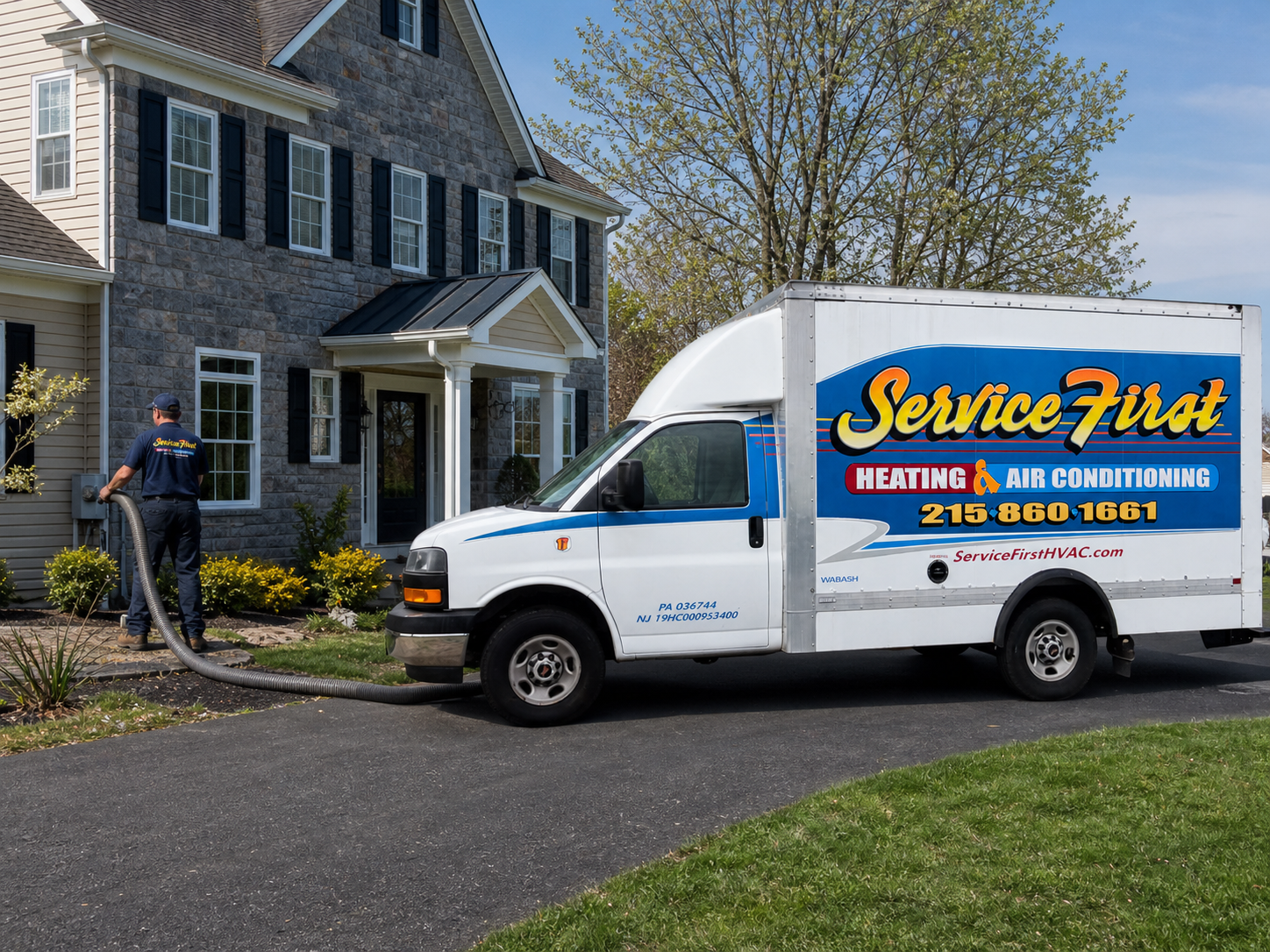
Negative pressure and agitation. Professional equipment creates negative pressure in your duct system. It uses a truck-mounted vacuum rated at 10,000 to 15,000 CFM. For a typical 2,000 sq ft home, you may have 8 to 12 supply runs. That process takes 3 to 5 hours. While the vacuum runs, rotating brushes loosen debris from duct walls. Compressed air tools help agitate that debris free. The vacuum then captures it. This dislodge-and-capture approach is the NADCA standard.
Register and grille cleaning. Every supply and return register gets removed, cleaned, and reinstalled. Dust buildup on registers is one of the most visible signs you may need air duct cleaning.
Sanitization (when needed). If mold or bacterial contamination is present, an EPA-registered antimicrobial treatment is applied after cleaning. This is not a substitute for physical cleaning but an additional layer for contaminated systems.
Dryer vent check. It makes sense to handle your dryer vent while the crew is already on-site. Lint buildup in dryer vents is a leading cause of house fires. Dryer vents follow the same airflow principles as HVAC ductwork.
Why Timing Matters for Homes in the Area
Spring and early fall are the two best windows for scheduling duct cleaning in the area. Here is why.
Spring cleaning before AC season. Your heating system has been circulating air all winter, pulling in dust, pet dander, and dry skin particles. Cleaning in April or May removes that accumulation before you switch to cooling mode. It also gives your AC system clean pathways to deliver conditioned air, which helps efficiency.
Fall cleaning before heating season. If you missed the spring window, early October is your next best opportunity. Summer humidity can lead to microbial growth inside ducts. Cleaning before you fire up the furnace keeps those contaminants from spreading through your home.
Both windows are also the busiest times for HVAC companies in Newtown and the surrounding area. Scheduling a few weeks ahead helps you get your preferred date.
Schedule Your Duct Cleaning With Service First
Service First has served Bucks County homeowners since June 2009. Technicians follow NADCA cleaning standards and use truck-mounted equipment rated for residential and light commercial systems. Your ducts are inspected before cleaning, and results are documented with camera footage. You get an honest assessment of your ductwork condition.
You may need a routine cleaning. Or you might suspect mold, pest contamination, or post-renovation debris in your ducts. Either way, contact Service First for a straightforward evaluation. Service First serves Newtown, Yardley, Doylestown, Langhorne, and all of Bucks County.
Schedule your air duct cleaning today or call (215) 876-0486 to get a quote.
Air duct cleaning in Newtown, PA is worth doing when the inspection supports it, and not before.
Frequently Asked Questions
How long does a professional air duct cleaning take?
For an average Newtown home with 8 to 12 supply vents and 3 to 4 return vents, expect the process to take three to five hours. Larger homes or systems with significant buildup may take longer. Learn more about our air duct cleaning process.
Will duct cleaning reduce my energy bills?
The U.S. Department of Energy estimates that 25 to 40 percent of heating and cooling energy is wasted due to contaminants forcing the HVAC system to work harder. Removing heavy buildup reduces static pressure on the blower motor, which can lower energy consumption. Pairing duct cleaning with routine HVAC maintenance delivers the best efficiency gains.
How do I know if a duct cleaning company is legitimate?
Look for NADCA certification, which requires adherence to ACR standards. Be wary of companies offering suspiciously low prices for whole-house duct cleaning, as that typically indicates a bait-and-switch or incomplete service. Read our guide on how to avoid air duct cleaning scams before hiring.
Should I also replace my air filter after duct cleaning?
Yes. Install a fresh filter immediately after cleaning to prevent any remaining loose particles from recirculating. This is also a good time to evaluate whether to upgrade to a MERV 11 or MERV 13 filter as part of your HVAC maintenance routine.
Can duct cleaning help with musty or stale odors?
Persistent odors from vents usually indicate mold, mildew, pest contamination, or accumulated organic material. Professional cleaning removes the source of the odor rather than masking it. If odors persist after cleaning, our indoor air quality services can identify deeper issues.
Is duct cleaning safe for older Bucks County homes?
Homes built before 1980 may have ductwork insulated with materials that require careful handling. A reputable company will inspect for fragile or deteriorated ductwork before beginning and modify their approach if necessary. See our tips on troubleshooting ductwork issues in Bucks County homes.
Can dirty air ducts make you sick?
Yes. Contaminated ductwork circulates dust mites, mold spores, pet dander, and bacteria every time your HVAC runs. The EPA links poor indoor air quality to respiratory infections, aggravated asthma, and allergic reactions. Homes with immunocompromised residents, young children, or elderly family members are at higher risk. Learn the signs your home has poor air quality.
Does duct cleaning improve air quality?
Professional duct cleaning removes accumulated dust, allergens, mold, and debris from your supply and return ducts, which directly reduces the volume of airborne contaminants circulating through your home. The improvement is most noticeable in homes that have never had ducts cleaned, homes with pets, or homes where renovation work introduced construction debris. Explore all of our indoor air quality solutions.
How much does air duct cleaning cost in PA?
The cost of air duct cleaning in Pennsylvania varies based on home size, number of vents, duct accessibility, and whether mold remediation or sanitization is needed. Contact Service First at (215) 876-0486 or schedule an appointment online for a specific quote. Be cautious of companies advertising extremely low flat rates, as these often indicate incomplete service or bait-and-switch pricing.
How often should air ducts be cleaned?
NADCA recommends every 3 to 5 years under normal conditions. Homes with pets should plan on every 2 to 3 years. Homes with smokers, residents with allergies, or homes near active construction may need cleaning every 1 to 2 years. After any major renovation involving drywall, sanding, or painting, schedule a cleaning regardless of the last service date. Read the full breakdown of how often air ducts should be cleaned.
Is NADCA certification important for duct cleaning?
NADCA certification means the company follows ACR (Assessment, Cleaning, and Restoration) standards, uses professional-grade equipment, and employs trained technicians. Non-certified companies may use inadequate equipment that fails to remove deep buildup or may damage ductwork during cleaning. Always verify certification at nadca.com before hiring. Learn why Bucks County homeowners trust Service First.